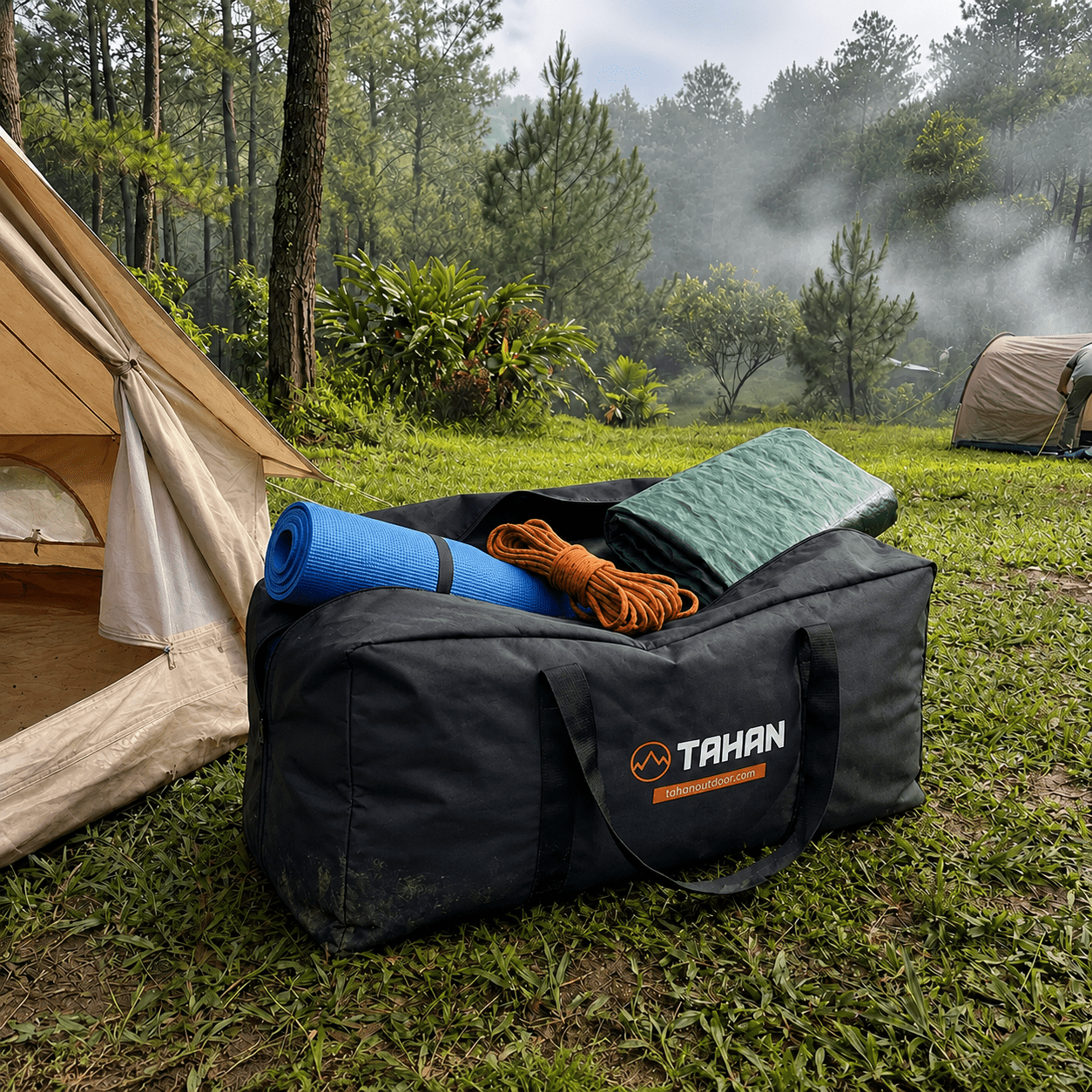

You've set up camp, the sky looks fine, you have a hot dinner going. Then 5pm hits and so does the rain. By 7pm the ground under your tent has turned from dry soil into slow-moving water, and by morning your sleeping bag is damp on the bottom even though the tent fly never failed. That is not a tent problem. That is a ground sheet problem, or more precisely, the absence of a good one.
This guide covers everything you need to know about ground sheets, tent footprints, and tarps before you spend a single ringgit. We will look at the sizing rule that most people get wrong, why placing it outside versus inside the tent matters, what waterproof ratings actually mean under body pressure, how to pick a pitch spot that drains, and how to store your alas khemah in Malaysia's humidity so it is not a mouldy mess by your next trip. Then we will show you where TAHAN gear fits honestly.
Footprint, Tarp, or Ground Sheet: What Is the Difference?
People use these three terms almost interchangeably but they are slightly different things. Knowing the difference helps you pick the right option.
- Tent footprint: A shaped, often brand-matched sheet cut to fit the exact floor outline of a specific tent model. Usually comes with attachment points that clip to the tent poles or stakes. Tidiest option, no excess material to fold under.
- Ground sheet (alas khemah): A generic rectangular or square sheet of waterproof fabric. You cut or fold it to fit your tent floor. More flexible, usually cheaper, works across multiple tent sizes.
- Tarp: A larger, multipurpose sheet. Can be used as a ground sheet but more commonly rigged above the tent for extra rain cover or as a standalone shelter. Heavier and bulkier if you are using it purely underneath.
For most Malaysian campers, a good universal ground sheet gives you the most value. A custom footprint is worth it if you own a premium tent you want to protect long term.
The Sizing Rule: Slightly Smaller, Every Single Time
This is the rule that causes the most wet-morning arguments at campsites. Get it right and your ground sheet works. Get it wrong and it actively makes things worse.
The Rule
Your ground sheet must sit slightly smaller than your tent floor on all sides, around 5 to 8cm (roughly 2 to 3 inches) smaller per edge. When rain runs down your fly and hits the ground, it should hit soil, not exposed ground sheet. The moment any part of your ground sheet sticks out past the tent wall, it becomes a rain collector that channels water directly underneath you.
What Goes Wrong When It Sticks Out
- Water running off the tent fly hits the exposed edge of the ground sheet.
- That water pools in the gap between the ground sheet and the tent floor.
- Body pressure and weight inside the tent forces moisture upward through the fabric fibres.
- You wake up damp and confused because your fly never leaked.
If your ground sheet is oversized, fold the edges under before you stake the tent down. Never let them stick out. This is, according to multiple experienced sources, the single most common ground sheet mistake campers make.
Inside vs. Outside: Where Does the Ground Sheet Go?
The standard advice is clear: the ground sheet goes under the tent, between the tent floor and the ground. That is its job. It protects the tent floor from abrasion, roots, gravel, and moisture wicking up from the soil.
The Outside (Standard) Method
- Ground sheet under the tent, tucked inside the tent footprint if using a fitted one.
- Protects the tent floor from wear and puncture.
- Adds an extra waterproof layer between you and the earth.
- Works well when sizing is correct so rain does not pool underneath.
The Inside Method (Condensation Management)
Some experienced campers, particularly in humid tropical conditions, place a thin ground sheet or tarp on the inside of the tent floor rather than underneath it. The reasoning: on hot, damp nights, condensation can form between the tent floor and the ground sheet when the ground is cooler than the air. Placing the ground sheet inside means any condensation stays below the tent floor and your gear stays dry on top.
- Works well if you are more worried about condensation than abrasion.
- Leaves your actual tent floor exposed to rocks and roots underneath.
- A practical approach for short, light trips on relatively smooth ground.
Most campers in Malaysia will be better served using the ground sheet outside and choosing a pitch spot carefully (more on that below). If you camp regularly on very smooth, groomed sites and condensation is your main issue, the inside method is a legitimate option.
Waterproof Ratings and Why Body Pressure Changes Everything
A waterproof rating, measured in millimetres of hydrostatic head (HH), tells you how much water pressure a fabric can hold back before it lets moisture through. Higher numbers mean more resistance.
| Rating (HH) | Typical Use | Real-World Condition |
|---|---|---|
| 1500 to 2000mm | Budget tent floors | Light rain, short exposure |
| 3000mm | Most mid-range ground sheets | Standard Malaysian downpour |
| 5000mm | Good ground sheets, Oxford fabric | Prolonged rain, saturated ground |
| 10,000mm+ | Heavy-duty / dual-coated sheets | Extended wet-season camping |
Why Kneeling and Sitting Matter
A hydrostatic head test is done with a column of still water. But when you kneel on a ground sheet to roll out your sleeping bag, or when a child sits in the corner of the tent, you are applying concentrated pressure. That pressure can push water through a fabric that would otherwise pass a 3000mm lab test. This is why a ground sheet rated at 5000mm is a sensible minimum for Malaysian conditions where the ground is often already wet before you pitch.
Material Comparison
- PE (polyethylene) tarp: Budget option, around 180g per square metre at typical Malaysian market specs. Decent short-term waterproofing, less durable under repeated folding and rough ground.
- PU-coated polyester: Most common commercial ground sheets. Solid waterproof coating, good durability. Ratings typically 3000 to 5000mm.
- Oxford fabric (210D to 420D): Tougher weave that stands up better to rocks and rough ground. 5000mm+ ratings are common. Heavier but more abrasion-resistant.
- Silnylon (silicone-coated nylon): Ultralight, packs very small, 3000 to 5000mm ratings. Main drawback: silnylon stretches slightly when wet, which can shift the ground sheet position on sloped ground overnight. Higher cost.
Picking Your Pitch: The Ground Sheet Cannot Fix a Bad Spot
Even a perfectly sized, well-rated ground sheet cannot save you if you pitch in a natural drain. Site selection is the first line of defence against a wet night in Malaysia, where a 30-minute downpour can turn a flat field into a slow river.
What to Look For
- Slightly elevated ground: Even a gentle rise of 10 to 15cm above the surrounding area drains dramatically better than flat ground.
- Look for existing water channels: Dry streambeds, paths between tree roots, and low points between two rises will fill first. Do not pitch there.
- Avoid depressions: A hollow in the ground looks sheltered but it collects water. During a heavy Malaysian downpour, saturated soil has nowhere to drain and pressure can force water up through even a good ground sheet.
- Check the lean: If the ground has a very slight slope (not steep enough to roll you), pitch with the slope so water runs away from the tent entrance, not toward it.
- Clear debris first: Sticks, roots, and gravel underneath your ground sheet will scratch the coating over multiple trips. Any dirt left between the ground sheet and tent floor acts as an abrasive every time the tent shifts slightly.
Drying and Storage: The Mould Problem in a Malaysian Garage
This is where Malaysian humidity turns a good ground sheet into a ruined one. Mould and mildew can begin forming in as little as 24 to 48 hours on a damp, folded ground sheet stored in a sealed stuff sack. With our year-round humidity, that timeline can be even shorter.
After Every Trip
- Shake off loose dirt and debris at the campsite before packing.
- At home, rinse with cold water and a soft brush to remove mud and grit. Avoid hot water and detergents because these degrade waterproof coatings.
- Hang it out fully open in a shaded, ventilated spot until completely dry. Direct strong midday sun for extended periods can also degrade coatings over time.
- Once dry, store it loosely rolled or loosely folded with air able to circulate. Never stuff it tightly into a sealed bag while even slightly damp.
Long-Term Storage
- Store in a cool, dry, ventilated space. A sealed plastic box in a hot garage is one of the worst options.
- If you use a storage bag, leave it loosely closed rather than sealed tight.
- Check it before your next trip. A musty smell means mould has started. Rinse again, dry thoroughly, and check the coating has not begun to delaminate.
A Quick Checklist Before You Buy
- Is it sized for your tent floor, or can you cut and fold it to fit? It must sit at least 5cm inside your tent wall on every edge.
- What is the waterproof rating? For Malaysia, aim for at least 3000mm HH, and 5000mm if you camp in wet season or on ground that stays damp.
- What material suits your trip type? Rough jungle ground needs tougher Oxford or PU-coated polyester. Ultralight trekkers can look at silnylon if budget allows.
- Does it have attachment points? Grommets or loops let you stake it down so it does not shift overnight, especially on a slight slope.
- How does it pack? If you are carrying it in, weight and packed size matter. If you are driving to the campsite, prioritise durability over pack size.
- Is it easy to dry? Thicker fabrics hold more moisture. Consider how quickly you can get it dry given your home storage situation.
- Does your sleep system keep you off the floor? A good ground sheet reduces ground moisture reaching you, but a mattress or sleeping pad adds insulation and comfort above it.
Where TAHAN Fits
Full disclosure: this is our own gear, designed in Malaysia for exactly the conditions above. Judge it against the checklist.
We do not currently sell a standalone ground sheet or footprint as a single product. What we do offer is a tent and a sleep system that work together to address the real problem this guide is about: keeping you genuinely dry and comfortable off wet Malaysian ground. Here is how they fit.
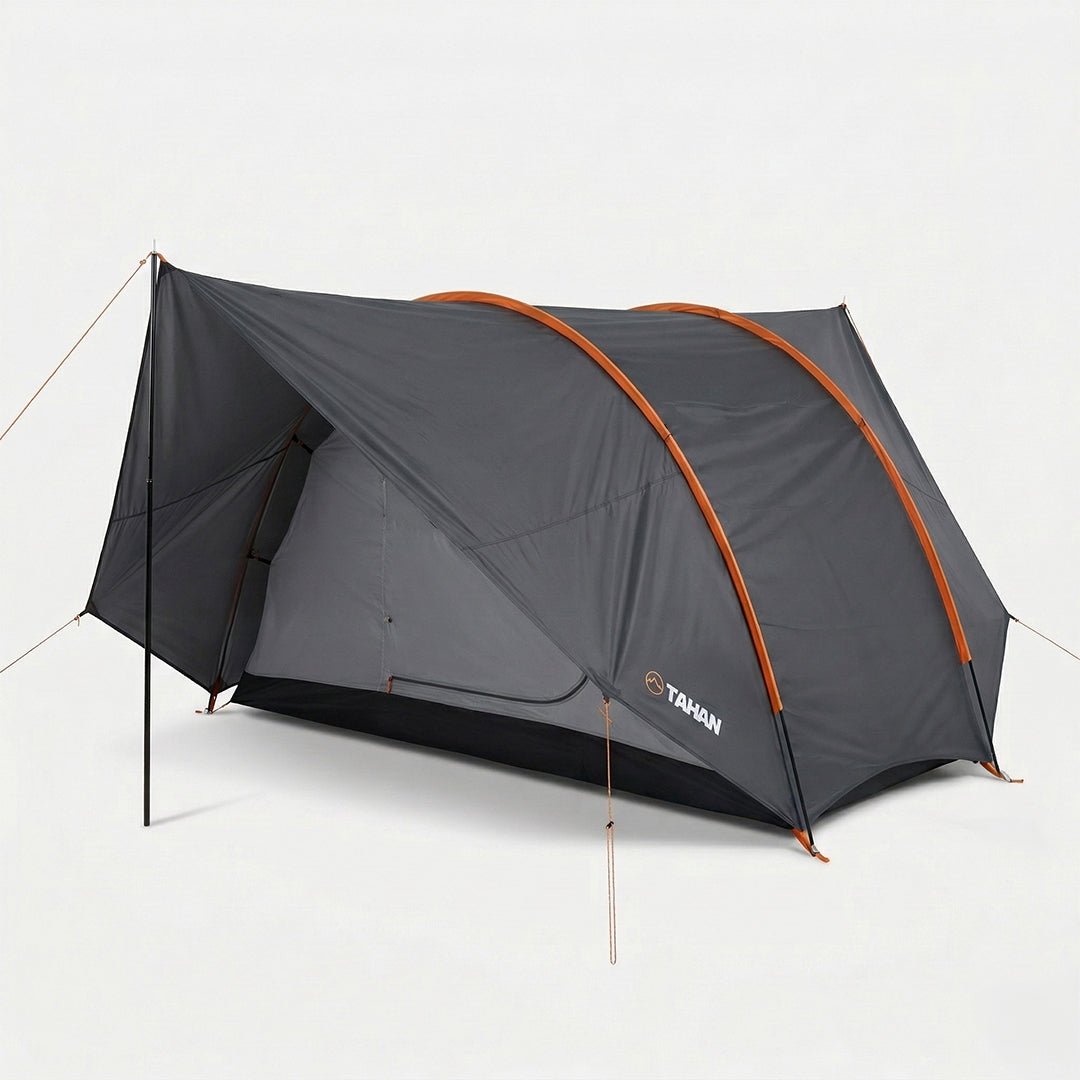
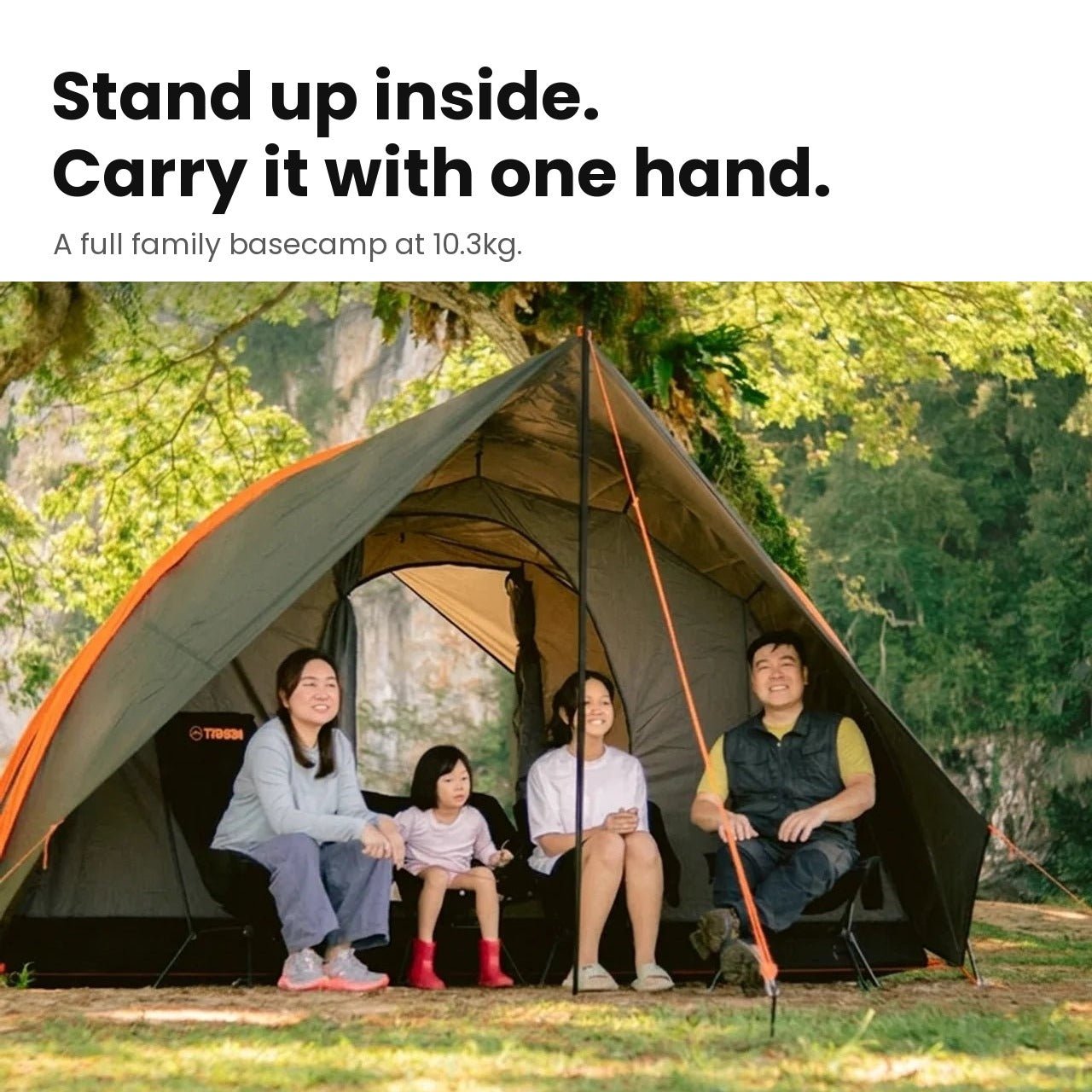
TAHAN Pavillion Family Tent with Canopy

- Sleeping cabin: 330 x 142cm floor with PU3000 210D Oxford fabric and sealed seams on the shelter portion.
- Full B3 mesh sleeping cabin for airflow in humid conditions.
- Sleeps 2 adults and 2 children.
- 2m standing height under the shelter; 1.75m inside the sleeping cabin.
- Shelter open at both ends so air moves through, reducing condensation buildup on the inner floor.
- Two-person setup in around 15 minutes; one person in about 20 minutes.
- Packs to 59 x 26 x 19cm and weighs 10.3kg, fits a Myvi, Axia, or City boot.
- Tested in real Malaysian downpours. 4.86 stars from 1,051 reviews.
- RM999 at time of writing. 1-year warranty on manufacturing defects.
The Pavillion suits families or groups who drive to the campsite and want a full basecamp with standing room, ventilation, and the option to leave the inner cabin home and use it as a shade shelter for six. Because the shelter has sealed seams and sits on a footprint-ready floor, pairing it with a correctly sized ground sheet (tucked at least 5cm inside the cabin walls) is straightforward.
Skip it if... you are a solo ultralight hiker looking for the lightest possible pack. At 10.3kg this tent is a car-camping shelter, not a carry-in option.
TAHAN Cloud Link Self-Inflating Foam Mattress

- 5cm foam core. Cannot go flat even with the valve open because you are lying on foam, not just air.
- Fills itself when you open the Lock Valve. Three breaths bring it to firm. Lock Valve holds firmness from 10pm to 7am.
- 132 x 155cm per unit. Two buckle together side by side (264 x 155cm) or end to end (310 x 132cm).
- End-to-end configuration fits inside the TAHAN Pavillion cabin as one continuous bed.
- Rolls to a 70 x 32cm bag, 3.2kg. Two fit in a Myvi boot alongside other gear.
- 75D pongee fabric top, not sticky air-bed plastic. Does not trap heat against your back.
- RM199 at time of writing.
The Cloud Link addresses what a ground sheet alone cannot: it lifts your sleeping surface off the tent floor entirely. Even on a night when some moisture has wicked through, 5cm of foam between you and the tent floor means your body stays dry and insulated. It suits families camping in the Pavillion and any camper who drives to the site and wants a proper bed rather than a thin pad.
Skip it if... you are counting every gram on a multi-day trekking route. At 3.2kg per unit it is a car-camping mattress. For hiking, a lighter inflatable sleeping pad makes more sense.
FAQ
What size should a ground sheet be for my tent?
Your ground sheet should sit around 5 to 8cm smaller than your tent floor on every edge. This stops rainwater running off the fly from collecting on an exposed ground sheet edge and pooling underneath you. The sizing rule matters more than any waterproof rating number.
Should my waterproof ground sheet go inside or outside the tent?
Standard practice is outside, under the tent floor, to protect against abrasion and moisture from the ground. Some experienced campers place a thin sheet inside on the tent floor to manage condensation in very humid conditions. For most Malaysian campers, outside is the right call combined with careful pitch selection.
What waterproof rating do I need for a tent footprint in Malaysia?
Aim for a minimum of 3000mm hydrostatic head. Because Malaysia gets sudden heavy downpours that saturate ground quickly, 5000mm is a more comfortable margin, especially if you camp in wet season or on ground that does not drain well. Remember that body pressure from kneeling or sitting applies force beyond what a static lab test measures.
What is an alas khemah and do I need one?
Alas khemah simply means tent ground sheet in Malay. Whether you call it a footprint, a groundsheet, or an alas khemah, it refers to the same thing: a waterproof sheet placed under your tent floor. In Malaysia's wet conditions, yes, you genuinely need one if you want your tent floor to last more than a few seasons.
How do I stop my ground sheet going mouldy in Malaysia's humidity?
Rinse it with cold water and a soft brush after every trip, then hang it fully open in a shaded, ventilated spot until it is completely dry before packing. Store it loosely rolled or folded, never sealed in a tight bag while still damp. Mould can start forming within 24 to 48 hours on a damp ground sheet stored in a sealed bag.
Does a ground sheet replace a sleeping pad or camping mattress?
No. A ground sheet protects the tent floor from outside moisture and abrasion. A sleeping pad or mattress lifts your body off the tent floor and provides insulation from ground temperature. In Malaysian conditions where the ground stays warm but damp, you want both: a ground sheet underneath the tent and a mattress above the tent floor.
If you are putting together a full sleep setup, the Camping Mattresses and Sleeping Pads guide covers what to look for in Malaysia's climate. And if you are deciding on a tent before sorting the ground sheet, the Family Camping Tents in Malaysia guide walks through what actually matters for local conditions.
More gear guides:
More gear guides:
Mike has been camping across Malaysia for over 10 years, from jungle treks in Taman Negara to beach camps in Perhentian. He co-founded TAHAN to build gear for tropical reality. Follow the TAHAN blog for honest campsite reviews, every week.