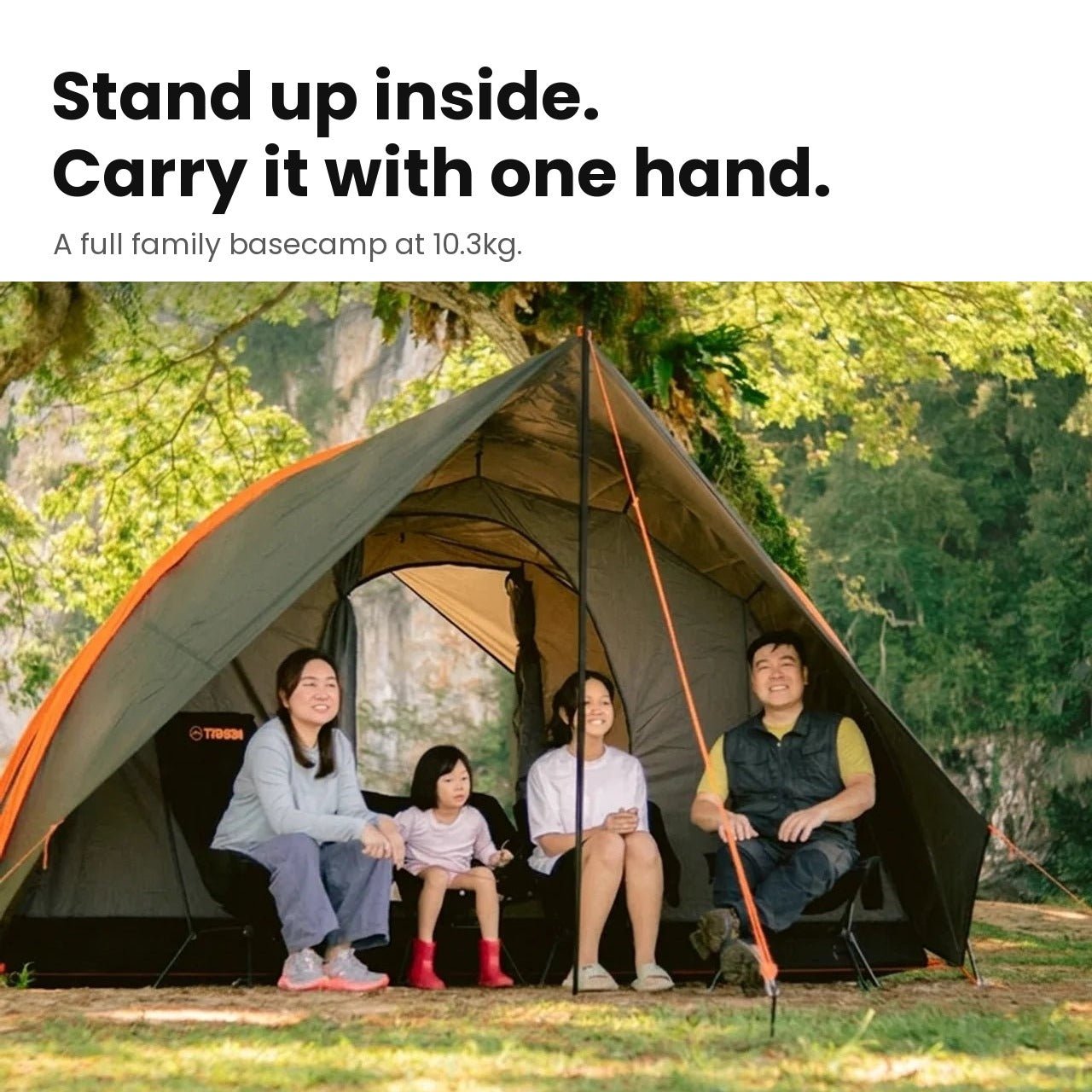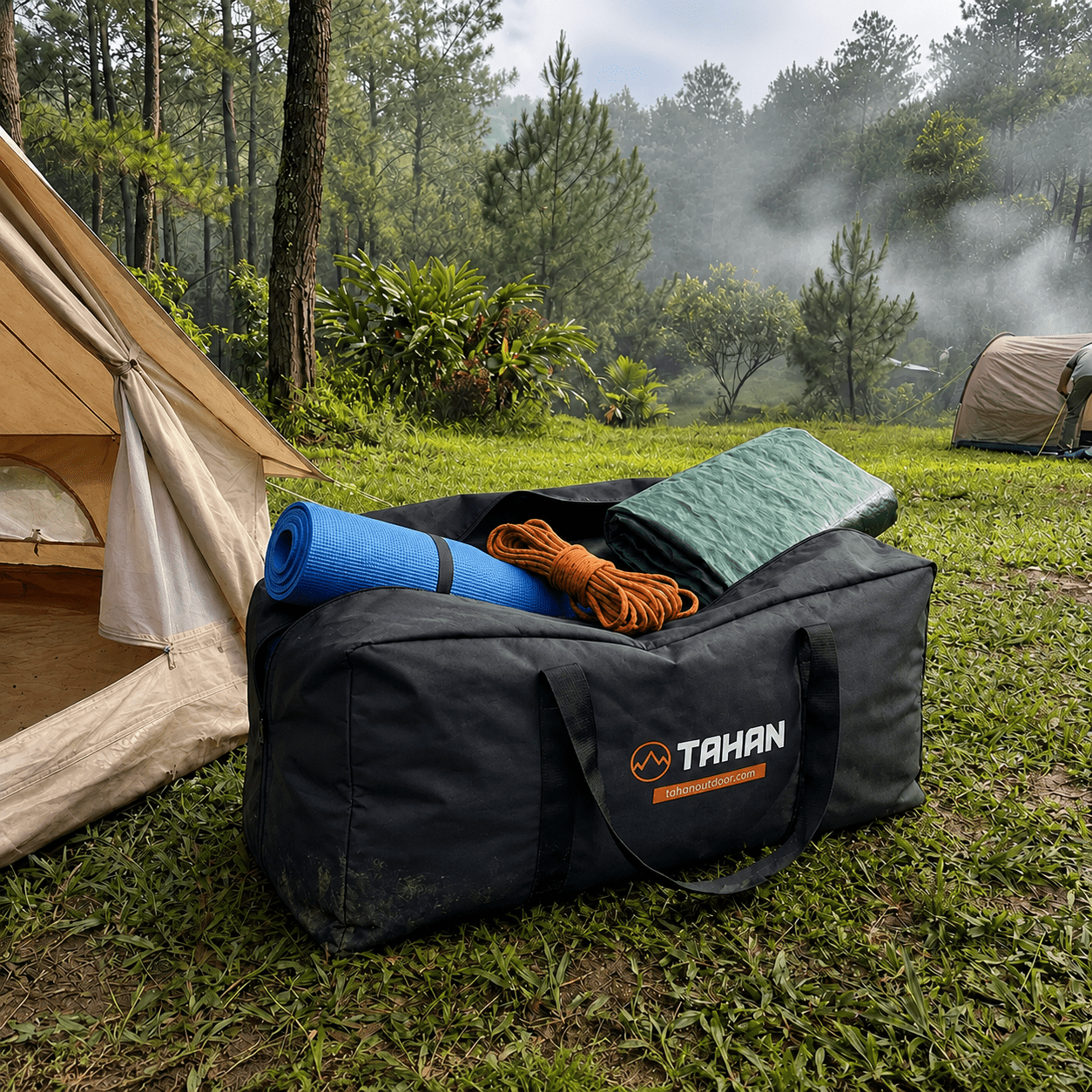

You know the moment. The carpark is 300 metres from the campsite, the ground has turned to soft wet grass overnight, and you are staring at a tower of coolers, tent bags, and folding chairs. Someone pulls out a trolley, loads it up, and the wheels immediately sink to the axle. The load rating on the box said 150kg. The ground did not care.
That gap between the number on the box and what actually happens on wet grass, loose gravel, or soft sand is what this guide is about. We will break down what really fails on a heavy duty trolley, when a foldable wagon is the right tool versus a flat platform trolley, and why a realistic 100kg rating often beats an inflated 300kg claim.
Platform Trolley vs Foldable Wagon: Pick the Right Tool First
Both get called a heavy duty trolley. They are built for very different jobs, and buying the wrong one wastes money no matter how high the load rating is.
| Factor | Platform Hand Trolley | Foldable Wagon |
|---|---|---|
| Load position | Stacked vertically against frame | Sitting loose inside an open bed |
| Wheels | 2 fixed, small diameter | 4 wheels, larger diameter |
| Best surface | Flat concrete, warehouse, tiles | Grass, gravel, sand, pasar lots |
| Best cargo | Boxes, appliances, stacked goods | Coolers, tents, chairs, loose gear |
| Steering | Tilt and push | Pull with telescopic handle |
| Folded size | Slim and upright | Flat panel, fits car boot |
Choose a platform trolley if you are moving stacked boxes on flat floors, shifting stock in a shop, or carrying a fridge up a flight of stairs. It excels at vertical loads in tight indoor spaces.
Choose a foldable wagon if you are hauling loose camping gear across uneven ground, rolling across a beach, doing a pasar malam run, or any outdoor trip where the surface changes underfoot. The rest of this guide focuses on foldable wagons used outdoors, because that is where the engineering decisions actually matter.
What the Load Rating Actually Tells You (And What It Hides)
A 300kg rating sounds impressive. Here is what that number is and is not.
- Static test, flat surface. Industrial stress tests apply loads beyond the rated weight on level ground to verify no bending or cracking. That is not your campsite slope.
- The safety margin question. Quality manufacturers rate at 80% or less of the maximum load sustained in testing. A product that lists 300kg may have failed in testing at just above that figure, giving you almost no real margin. A product rated 100kg that failed at 200kg in testing is more honest and more durable in daily use.
- Dynamic loads are different. Dragging a loaded wagon over a tree root, dropping a wheel off a kerb, or hitting a rock mid-pull creates impact forces far above the static load. Axles bend under these conditions well below the stated rating.
- The rule worth remembering: if your typical load is 80kg, do not buy a trolley rated exactly 80kg. You want headroom. But a realistic, tested 100kg is more useful than an unverified 300kg claim from a seller you cannot audit.
The Five Things That Actually Fail
1. Wheels on the Wrong Surface
Wheel size and material matter more than load rating on outdoor ground.
- Small hard plastic wheels (under 5 inches) grind and slip on gravel, stall on wet grass, and sink in sand. They work fine on smooth tile.
- PU (polyurethane) caster wheels roll quietly on concrete without scratching, but they are not built for outdoor terrain.
- Rubber wheels at 8 inches and above roll over grass, gravel and loose ground by bridging the gaps rather than sinking into them. Larger diameter means the wheel climbs obstacles instead of stopping at them.
- Balloon tires at 13 inches are specifically for deep, dry beach sand where standard wheels sink regardless of load. Owners report rolling through deep sand with a full cooler without the front wheels digging in.
- The wet grass problem: any wheel under about 6 inches will compress wet grass and sink to the axle if the load is heavy. The wheel is not failing. The physics of a small contact patch on soft ground is failing.
2. Axles and Bearings Under Real Conditions
- Axles bend after repeated kerb hits, overloaded runs, or heavy beach use. This is the most common hardware failure reported by buyers.
- Bearings show grinding or clicking sounds when dry or worn. Tread separation (peeling edges, cracks, uneven contact) means a wheel is close to failure.
- Side-to-side wobble and wheels that stop tracking straight are early warnings, not cosmetic issues.
3. Frame Joints Under an Uneven Load
The folding hinge is the first structural failure point on cheaper foldable wagons. When you pull a wagon loaded with a cooler on one side over a root, the frame twists. Stamped metal hinges with a single pin will crack or deform at that joint over time. Look for reinforced hinge construction. Frames that use powder-coated steel throughout transfer stress more evenly than frames that use thinner steel at the fold point only.
4. Fabric After a Malaysian Season
- Basic polyester without a coating fades and weakens after repeated sun and rain cycles. Malaysian UV and humidity are not gentle.
- 600D Oxford fabric with a PVC coating resists water and tearing far better than uncoated fabric. The coating matters for wipe-down after muddy trips too.
- Weak zippers on cargo bags and fiddly straps are the soft-goods failure points most commonly flagged by buyers.
- An open fabric bed without a solid bottom means small items fall through unless you use a liner. Know what you are buying.
5. Brakes and Handles on a Slope
- A loaded wagon on a slope with no brake will roll. A foot-lock brake lets you park it while you open the car boot or set up camp without chasing it downhill.
- Telescopic handles with a locking mechanism let you adjust for your height and terrain. A handle that collapses under load or that you cannot lock at the right extension is a genuine daily-use problem.
- On some cheaper models, the front wheels are not steered by the pull handle. On soft or uneven ground with a heavy load, turning becomes a wrestling match.
Folding: What It Costs You in Rigidity
A foldable wagon is always a compromise between packability and structural stiffness. Understanding the trade-off helps you choose well.
- Every fold point is a potential flex point under load. The more fold points, the more joints need to be engineered carefully.
- A wagon that collapses to a genuinely flat panel for the car boot is more useful than one that is nominally foldable but still takes up half the boot.
- Check that the folding mechanism does not require tools and does not pinch fabric in the process. Damaged fabric at the fold crease is the first sign of a design that was not tested properly.
- Storage size matters: a folded dimension that fits across the width of a standard Proton or Perodua boot makes the wagon actually usable for most Malaysian families.
A Quick Checklist Before You Buy
- Surface first: flat concrete or outdoor terrain? If outdoor, what mix of grass, gravel, and sand?
- Wheel diameter: 8 inches minimum for mixed outdoor ground; larger for beach sand.
- Wheel material: rubber for outdoor grip and toughness; avoid hard plastic if you will leave pavement.
- Frame at the hinge: is the fold point reinforced? Powder-coated steel throughout or only at some sections?
- Fabric coating: 600D Oxford with PVC or similar for Malaysian rain and sun. Check if it wipes clean.
- Brake: foot-lock brake if you will be on any incline or slope.
- Load rating honesty: does the seller explain how they tested it? A conservative, tested rating protects you better than a headline number with no method behind it.
Where TAHAN Fits
Full disclosure: this is our own gear, designed in Malaysia for exactly the conditions above. Judge it against the checklist.
TAHAN AllTerrain XL Wagon with Tabletop


- Load capacity: rated up to 100kg. A realistic number you can plan around, not a marketing headline.
- Cargo volume: 150 litres, open bed 90cm x 50cm, 30cm deep. Enough for a full family camp load in one trip.
- Wheels: 8-inch all-terrain rubber with 360-degree rotating front wheels and a foot-lock brake. Built for grass, gravel, sand and uneven campsite ground, not just flat pavement.
- Frame: powder-coated steel.
- Fabric: 600D Oxford with PVC coating for water and tear resistance. Wipes down after muddy or dusty trips.
- Handle: adjustable telescopic handle with locking mechanism.
- Folded size: 73cm x 30cm x 26cm. Tabletop stores inside the wagon when folded.
- Weight: 10.4kg.
- Tabletop feature: converts the wagon into a prep surface at camp. Rear flap lets you access gear inside without removing the tabletop.
- No tools needed for setup or folding.
- Price: RM499 at time of writing.
- Rated: 4.83 stars from 1,127 reviews.
This wagon suits campers, beach-goers, and pasar runners who need to move a full load across mixed terrain in one trip and want a camp table waiting at the other end. It is also practical for family picnics and outdoor events where you want one haul from the car and a surface to set things on when you arrive.
Skip it if you are moving stacked boxes on flat concrete floors, because a platform hand trolley is genuinely the better tool for that job, or if you need balloon tires specifically for deep dry beach sand on heavily loaded beach trips.
See the AllTerrain XL Wagon at TAHAN
FAQ
What does heavy duty actually mean on a foldable trolley?
On a foldable wagon, heavy duty should mean reinforced frame joints at the fold points, a fabric with a protective coating, wheels large enough and made from the right material to handle the surface you are using it on, and a load rating backed by real testing. A 300kg static rating on a warehouse platform trolley and a 100kg tested rating on a foldable wagon for outdoor use are measuring very different things. The outdoor rating is usually the more meaningful number for camping and event use.
Can a heavy duty foldable trolley handle wet grass and gravel at Malaysian campsites?
It depends mostly on wheel size and material, not the load rating. Rubber wheels at 8 inches and above perform well on wet grass, gravel, and light sand because the larger contact area spreads the load and the wheel climbs small obstacles rather than sinking. Small or hard plastic wheels will struggle on the same surfaces regardless of what the frame is rated for.
Is a 300kg trolley better than a 100kg trolley for camping?
Not automatically. A 300kg rating is meaningful on a flat warehouse floor with stacked goods. For a foldable wagon on campsite terrain, a realistic 100kg rating that has been properly tested with a safety margin is more trustworthy than an unverified 300kg claim. Check whether the seller explains how the rating was tested before treating the number as a buying signal.
What is the difference between a troli camping and a platform hand trolley?
A troli camping (foldable wagon) has four wheels, an open cargo bed, and a pull handle. It is designed for loose gear on uneven outdoor ground. A platform hand trolley is L-shaped with two wheels and a small ledge, designed for stacked vertical loads on flat surfaces. Both move heavy things, but they are built for completely different situations. Use the wrong one and you create more work, not less.
What size wheels do I need for sand and gravel?
For mixed campsite ground including gravel and light sand, 8-inch rubber all-terrain wheels are a practical starting point. For deep, loose, dry beach sand where you are fully loading the wagon, you need larger balloon-style tires (around 13 inches) that provide enough flotation to stay on top of the surface rather than sinking. For hard-packed sand and general outdoor use, 8-inch rubber wheels handle the job well.
Why does my wagon trolley sink on wet grass even though it is rated heavy duty?
Small wheels on soft wet ground sink because the contact patch is too small to spread the weight across the surface. The load rating does not change the physics of wheel diameter on soft ground. A larger wheel bridges gaps in soft terrain and distributes weight over a bigger area. If your current wheels are under 6 inches in diameter, they will continue to sink on wet grass regardless of what the frame is rated for.
If you are still deciding between wagon types and storage options, the guides on Camping Trolley Malaysia and Camping Wagons and Gear Storage cover how Malaysians are actually using these at campsites and how to pack them efficiently.
More gear guides:
Mike has been camping across Malaysia for over 10 years, from jungle treks in Taman Negara to beach camps in Perhentian. He co-founded TAHAN to build gear for tropical reality. Follow the TAHAN blog for honest campsite reviews, every week.