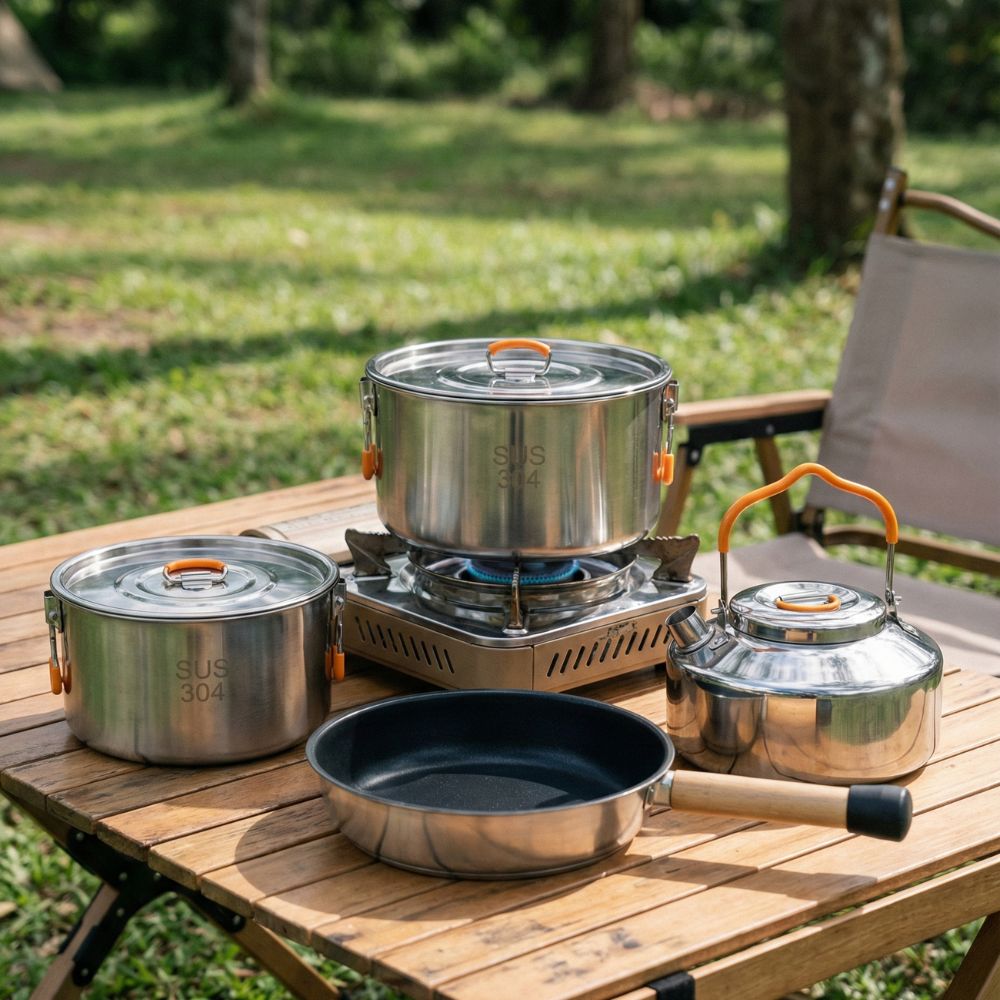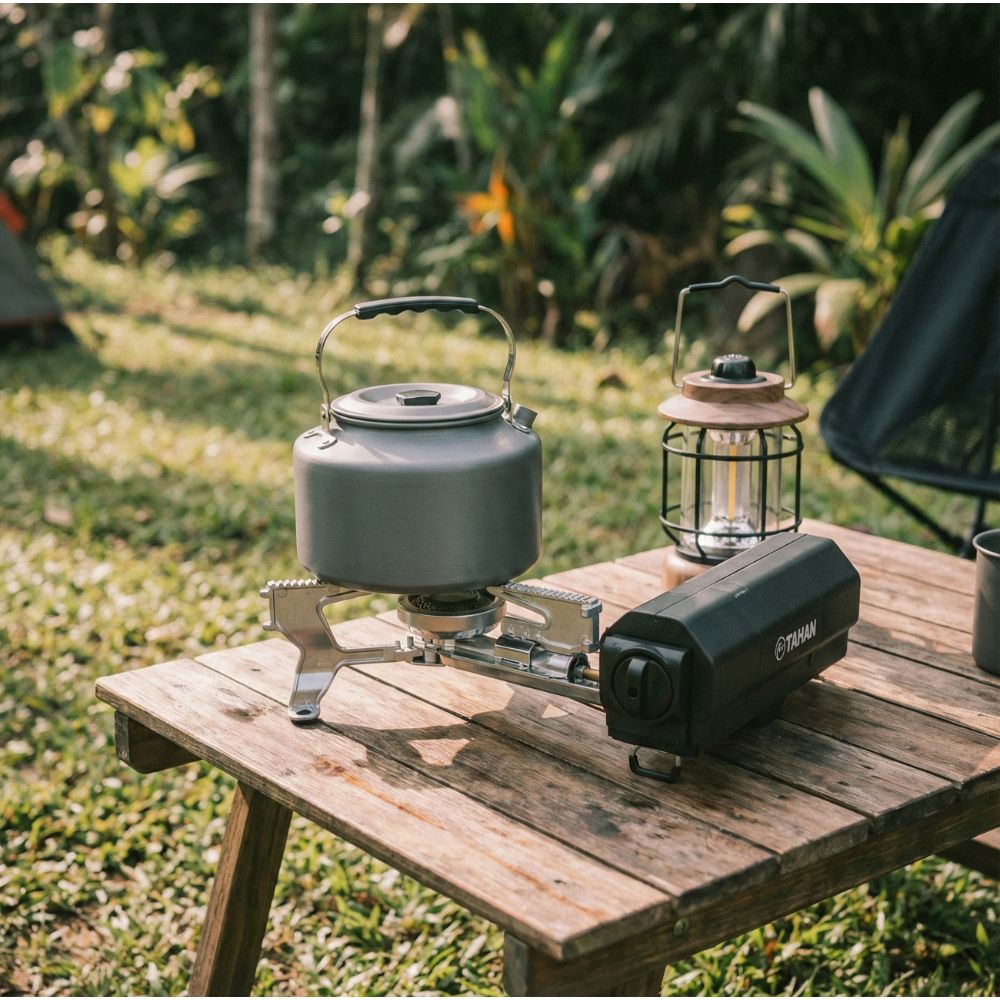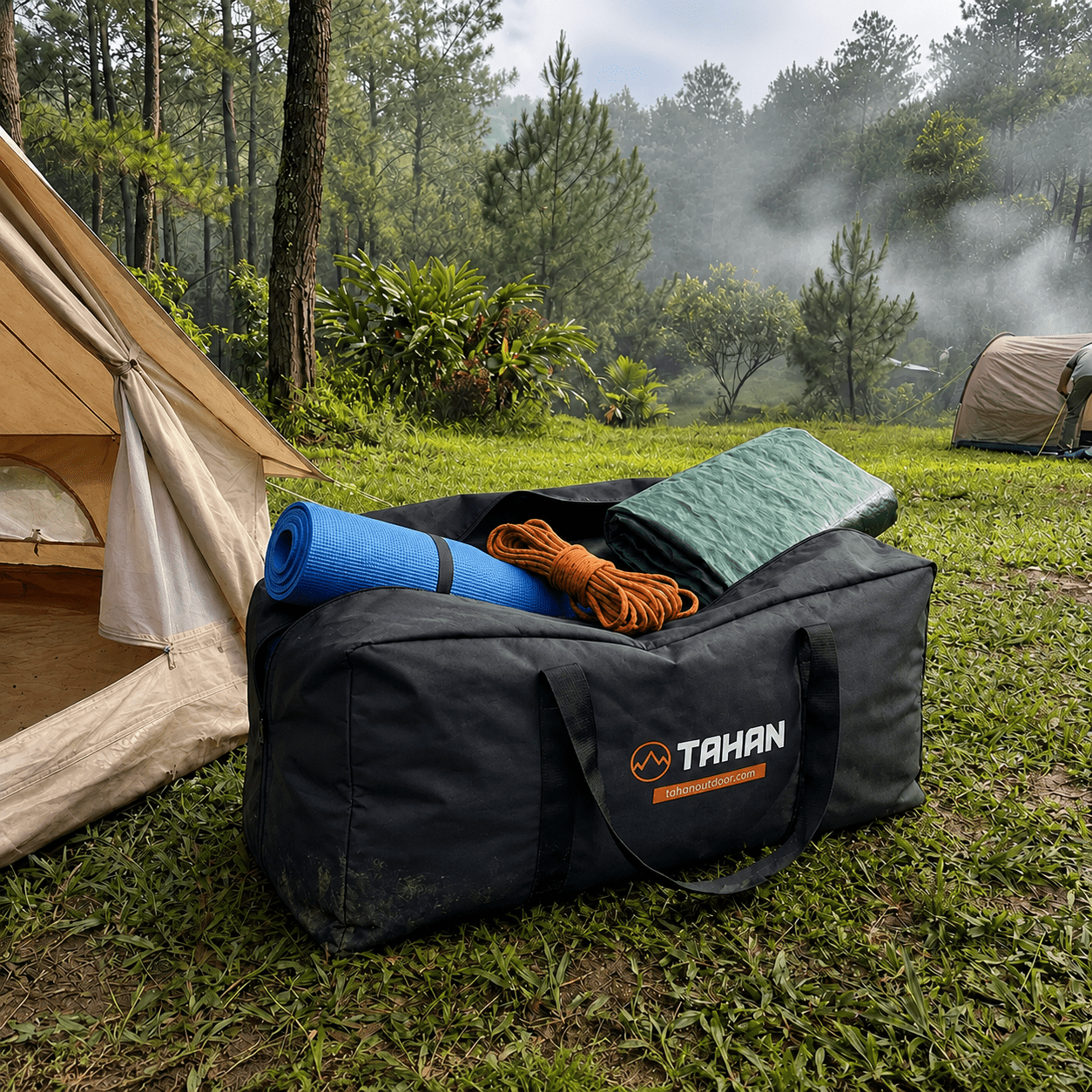

You know the 2pm sky that looks perfectly fine. The tent is up, the stove is going, lunch is half cooked, and then the rain arrives sideways. Not drizzle. Proper Malaysian afternoon rain, the kind that turns a campsite into a slow river in minutes. The tent keeps its inside dry, but the cooking gear, the bags at the door and everyone trying to eat get soaked. A flysheet over the cooking spot changes that whole afternoon.
That friction is exactly what this guide is about. We will settle the difference between a tent's built-in rain fly and a separate flysheet you pitch over camp. We will decode waterproof numbers in plain words, help you pick the right size for your group, cover the pitching basics that actually matter, and be straight with you about when a flysheet earns its place and when you simply do not need one.
Two Different Things That Share One Name
People use "flysheet" to mean two separate pieces of gear, and mixing them up leads to bad purchases. Here is what each one is.
The Tent's Own Rain Fly
Every modern double-wall tent has an outer shell that goes over the inner mesh cabin. This is technically the flysheet or rain fly. It is cut to fit that specific tent, it attaches to the tent poles, and it is not removable in the sense that you would pitch it separately. When a tent spec sheet says "PU2000mm flysheet," this is what it means. Its job is to keep the sleeping space dry. It does not extend beyond the tent footprint.
A Separate Flysheet or Tarp
This is a flat sheet of coated fabric with reinforced tie-out points around the edges and corners. You pitch it independently using trees, trekking poles, or dedicated poles, and it creates a covered area that is separate from your tent. Think of it as a roof you build above the ground. It is what most people in Malaysia mean when they say "flysheet khemah" or "camping tarp." This guide is mostly about this second type.
When a Separate Flysheet Actually Earns Its Place
A flysheet is not mandatory kit for every camping trip. It earns its place in specific situations.
- Dome tent with no porch or canopy. Your tent keeps you dry when you are inside, but the moment you open the door in rain, everything at the entrance gets soaked. A separate flysheet pitched over the front door creates a dry zone for boots, packs, and cooking.
- Cooking in the rain. Open flames and sudden Malaysian downpours are a miserable combination. A flysheet over the cooking area means meals still happen, morale stays high. Keep the tarp at least two metres away from any open flame, and never directly above it.
- Hammock camping. A hammock has no tent body above you. A flysheet is your only roof, so it is non-negotiable for sleeping dry.
- Group lepak space. A 4x4 flysheet can shelter six people sitting around a mat. It is the communal living room for a group campsite, especially useful at 2pm when the sun is direct and brutal even without rain.
- Adding shade, not just rain cover. Even on a dry day, a flysheet on the south-facing side of camp cuts heat significantly. Shade matters in Malaysian climate just as much as waterproofing.
When You Probably Do Not Need One
If your tent already has a full-coverage canopy or porch shelter built into the design, a separate flysheet is often redundant. A tent with a 2m shelter extending past the sleeping cabin already gives you the cooking and lepak space you need. Adding a flysheet on top of that is just extra weight and extra setup time for no real gain.
Waterproof Ratings in Plain Words: PU2000mm vs PU3000mm
The number after "PU" is the hydrostatic head rating. It measures how tall a column of water the fabric can hold against it for one minute before a drop seeps through. A rating of 2000mm means the fabric resists a two-metre column of water. 3000mm means three metres. In practice, here is what that means in a real Malaysian downpour.
| Rating | What It Resists | Suitable For | Notes |
|---|---|---|---|
| Under 1500mm | Light drizzle, morning mist | Shade purposes only | Not considered waterproof by most standards |
| PU1500mm to PU2000mm | Moderate rain, short duration | Casual camping, dry season trips | Most common rating on Malaysian market; 210D Oxford fabric with PU2000mm is the standard entry level |
| PU2000mm to PU3000mm | Heavy sustained rain, afternoon thunderstorms | Year-round Malaysian camping | Meaningful step up; handles most conditions you will face here |
| PU3000mm and above | Very heavy rain, prolonged exposure | Serious camping, base camp setups | Silnylon options at 3000mm add longevity advantage over PU at same number |
One thing the number does not tell you: how long that rating lasts. PU coatings degrade over time, especially when stored damp or exposed to heat repeatedly, which in Malaysia is nearly every trip. Silicone-treated nylon (silnylon) holds its waterproof performance longer than PU at the same hydrostatic head number, though it costs more and requires silicone-based seam sealant rather than standard tape.
Why Seams Matter as Much as the Rating
The fabric rating is only half the story. Every seam is a row of needle holes, and water finds those holes before it finds the fabric itself. Seam taping (a layer of clear tape bonded over the seam from inside) is the factory solution. It works well on heavier fabrics like 68D and above. On lighter materials, heat and humidity cause the tape to degrade and flake off over time, which is exactly the environment every flysheet in Malaysia lives in. Seam sealing with a brush-on waterproof compound is the more durable fix. Many budget tarps sold on Shopee and Carousell have no factory sealing at all. If you buy one and plan to use it in heavy rain, apply seam sealant yourself before the first trip. Pre-sealed is worth paying a little more for.
Sizes and Which Group They Fit
Getting the size wrong is the most common flysheet mistake. Too small and rain blows in from the sides. Too large for your group and you are carrying weight for no reason.
- 2.5m x 2.5m or smaller: Solo or two-person, hammock use, shade for a small cooking spot. Limited coverage in wind-driven rain.
- 3m x 3m: The practical minimum for two to three people with gear. Just enough for a small dome tent plus a cooking zone.
- 3m x 4m or 3.5m x 3.5m: The sweet spot for three to four people. One Carousell seller noted this size as the optimal balance, a 4m span can obstruct the view and feel heavy, while 3m leaves people at the edges in the rain. Fits most family dome tents with room for cooking at the front.
- 4m x 4m and above: Group camping, six or more people, or a base camp setup where the flysheet is the main communal space. Sets like the Trofeo 3x6m cover eight to twelve people. Heavy, needs proper anchor points.
Pitching Basics That Actually Matter in Malaysian Conditions
A flysheet pitched wrong will fail in the first ten minutes of rain, even at PU3000mm. These are the rules that matter here.
- Pitch before the rain arrives. Malaysian afternoon storms give you maybe fifteen minutes of warning. If you wait until the clouds are dark, you are already too late. Pitch the flysheet when you arrive, not when you smell rain.
- Keep every face at 30 degrees or steeper. A nearly flat tarp pools water in the centre and can collapse under the weight within minutes of heavy rain. No exceptions. Steep pitch forces water off both sides fast.
- Windward side goes low. Orient the lowest edge of the flysheet into the wind direction so rain does not drive underneath. The open or high side faces away from prevailing wind.
- Ridgeline must be taut. A sagging ridgeline pools water in the middle and collapses in moderate rain. Use a trucker's hitch or a ratchet-lock guyline to get the line genuinely tight, not just hand-tight.
- Leave clearance at the ground edges. For the A-frame setup, stake corners out wide and leave about 10 to 15cm clearance at the edges so air can move through. This reduces heat buildup and prevents the tarp from acting as a wind sail.
- Never pitch directly over a fire. Polyester and nylon flysheets ignite or melt. Polycotton fabric is more spark-resistant but not fireproof. Keep any open flame at least two metres clear of the tarp, and never cook directly below it.
A Quick Checklist Before You Buy
- Is the hydrostatic head rating at least 1500mm? For Malaysian use, aim for PU2000mm or above.
- Are the seams factory-sealed or taped? If not, budget time to apply seam sealant before first use.
- Does the size actually cover your group with room for gear at the edges, not just bodies?
- Are the tie-out points reinforced? Grommets that tear out in wind make the flysheet useless.
- Does it come with enough guylines, and are the guylines adjustable without needing to tie knots in the dark?
- Does your campsite have suitable anchor points? Trees, poles, or vehicle roof racks, know before you buy a 6m monster tarp.
- Does your tent already have a canopy or porch shelter? If yes, ask whether a separate flysheet adds anything real.
Where TAHAN Fits
Full disclosure: this is our own gear, designed in Malaysia for exactly the conditions above. We want to be straight with you upfront: TAHAN does not sell a standalone flysheet or tarp. If you came here looking for a budget 3x3 tarp to pitch over your existing dome, we are not your answer for that specific product right now. What we do sell is the Pavillion, which is a different answer to the same problem: a shelter with the coverage built in, so you do not need to rig a separate flysheet at all. Judge it against the checklist above.
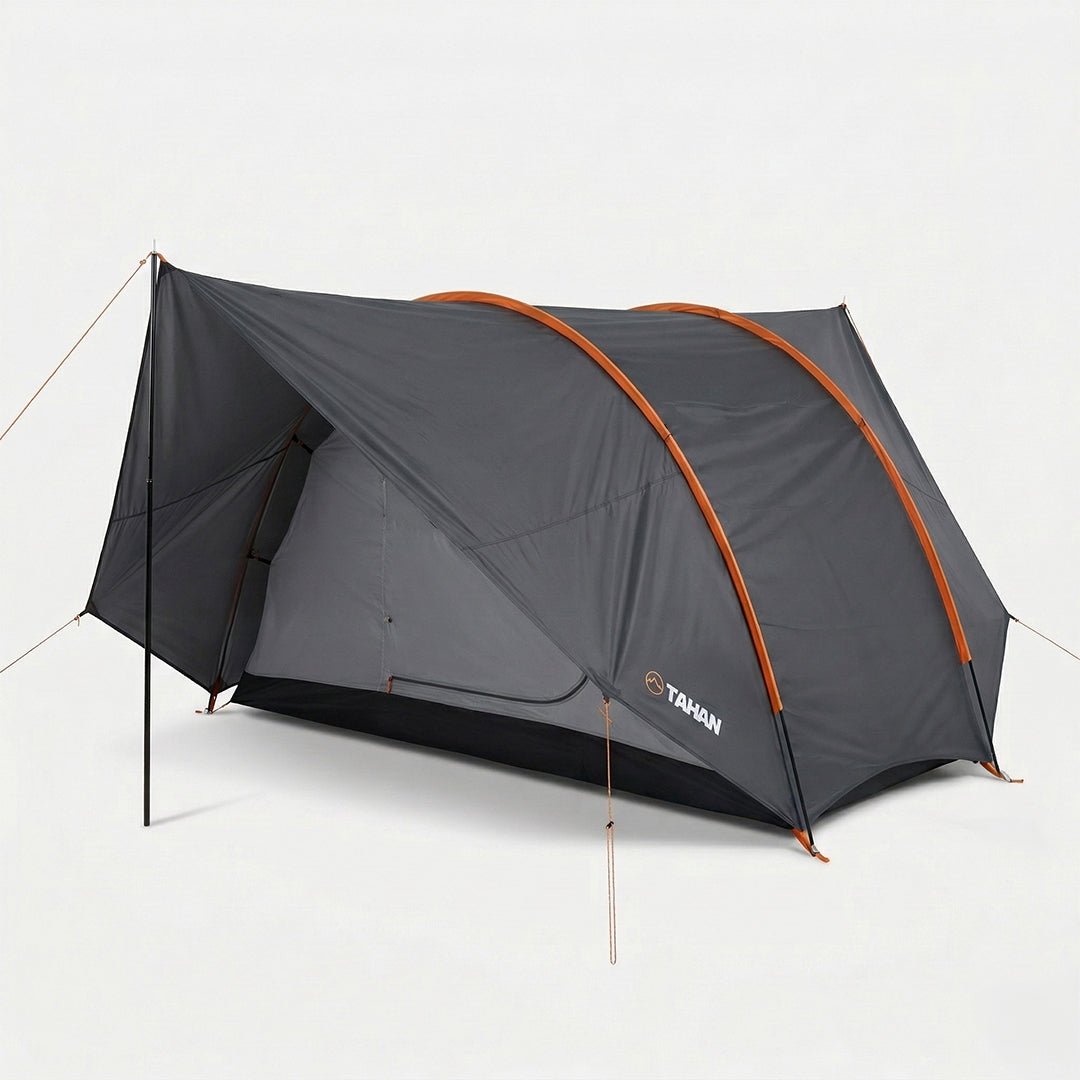
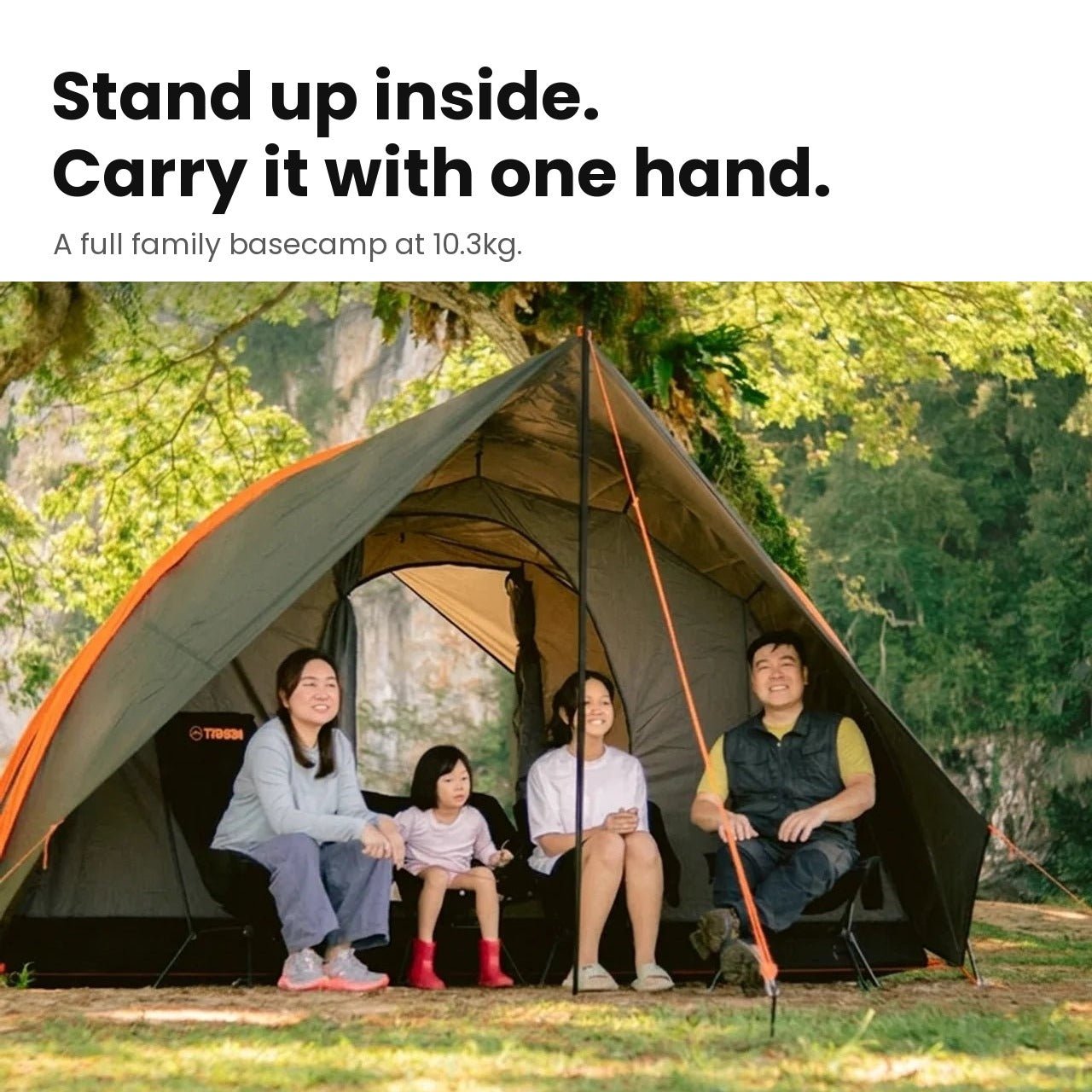
TAHAN Pavillion Family Tent with Canopy

- PU3000 210D Oxford shelter fabric with sealed seams, rated for heavy Malaysian downpours.
- 2m standing height under the shelter roof, 1.75m inside the sleeping cabin.
- Shelter extends well beyond the sleeping cabin, seats up to 6 people in shade when the inner cabin is left home.
- Inner cabin is full B3 mesh for airflow in heat, 330 x 142cm, sleeps 2 adults and 2 kids.
- Steel and fibreglass frame, two-person setup in about 15 minutes, solo in about 20 minutes.
- Packed size 59 x 26 x 19cm at 10.3kg, fits the boot of a Myvi, Axia, or City.
- 4.86 stars from 1,051 reviews at RM999 at the time of writing.
- 1-year warranty on manufacturing defects.
The Pavillion suits a family of four or a group of friends who want one shelter that handles cooking, sleeping, and lepak space without needing a separate tarp rigged overhead. The sealed-seam PU3000 shelter is the flysheet equivalent already built into the structure. You arrive, you pitch once, and the covered space is there whether it rains at 2pm or 2am.
Skip it if: you are going solo or as a pair on a lightweight backpacking trip where every gram counts. At 10.3kg the Pavillion is a car-camping and campsite setup, not a pack-in shelter. If you need a simple tarp to go over a hammock deep in the jungle, this is not that product.
4M Pulley Adjuster Reflective Guyline (Pack of 4)

- 4mm diameter reflective nylon rope, orange, visible when any torch or headlamp hits it at night.
- Ratchet-and-lock mechanism: pull to length, lock holds, press release to undo. No knots required.
- Aluminium fixed carabiner and fibre-reinforced plastic (FRP) pulley for corrosion resistance.
- 4 metres per line, four lines per pack. One pack covers a full flysheet or tent setup.
- RM29 per pack of four at the time of writing.
If you are already using any flysheet or tarp, whether a standalone tarp or the Pavillion's shelter panel, these guylines solve the single biggest pitching failure: a loose, sagging ridgeline that pools water. The ratchet mechanism means you can get a genuinely taut line in under a minute, even in the dark when rain is already starting. One pack of four handles a complete shelter. For a larger group setup with multiple anchor points, add a second pack.
Skip it if: you already own quality adjustable guylines that you trust. There is no reason to double up on lines you do not need. These are useful additions, not mandatory for everyone.
FAQ
What is the difference between a flysheet and a camping tarp?
In Malaysian camping language, flysheet and camping tarp refer to the same thing: a flat coated sheet you pitch independently over your campsite using poles, trees, or guylines. The confusion comes because "flysheet" also refers to the rain fly that comes attached to a double-wall tent. When people say "flysheet khemah" or "flysheet camping," they almost always mean the standalone tarp version.
Is PU2000mm enough for Malaysian rain, or do I need PU3000mm?
PU2000mm will handle moderate rain and most afternoon showers, which is adequate for casual camping in drier months. For year-round use in heavy Monsoon-season downpours, PU3000mm gives you a meaningful extra margin, especially combined with sealed seams. The seam sealing matters as much as the number on the label. A PU3000mm tarp with unsealed seams can let in more water than a PU2000mm tarp with properly taped seams.
What size flysheet do I need for a family of four?
A 3m x 4m or 3.5m x 3.5m is the practical sweet spot for a family of four. It covers a standard dome tent footprint plus a cooking and eating area in front. If you want a proper communal living space or you camp with another family, step up to 4m x 4m. Anything under 3m x 3m will leave people at the edges in the rain once bags and gear take up floor space.
How do I stop my flysheet from pooling water in the middle?
Pitch it steep. Every face of the tarp should be at 30 degrees or steeper, no exceptions. A sagging ridgeline is the most common cause of pooling. Use a trucker's hitch or a ratchet-lock guyline to pull the ridgeline genuinely taut before you stake the corners out. On an A-frame setup, stake the corners wide and low so the sides slope sharply to the ground. If water is pooling, the pitch is too shallow.
Can I cook under a flysheet?
Yes, but keep the flame at least two metres away from any part of the tarp and never directly below the fabric. Polyester and nylon tarps melt or ignite. Polycotton tarps are more spark-resistant but still not fireproof. The flysheet is a rain and sun roof, not a fire hood. Always make sure there is enough airflow so fumes and heat can escape, especially when using gas burners.
Do I need a flysheet if my tent already has a canopy?
Probably not. If your tent design already includes a shelter or porch that extends past the sleeping cabin with proper waterproofing and sealed seams, a separate flysheet adds weight without adding much function. The situations where a separate flysheet earns its place are: dome tents with no porch, hammock camping with no overhead cover, and group setups where the sleeping tent cannot cover the cooking and social area.
If you are planning a trip with the family, the guides on Family Camping Tents in Malaysia and Khemah Camping Malaysia go deeper into tent selection and campsite choices that pair well with everything covered here.
More gear guides:
- Ground sheet guide: keeping wet ground out
- Cara pasang khemah (step by step)
- Naturehike Village 13 vs TAHAN Pavillion
Mike has been camping across Malaysia for over 10 years, from jungle treks in Taman Negara to beach camps in Perhentian. He co-founded TAHAN to build gear for tropical reality. Follow the TAHAN blog for honest campsite reviews, every week.