
Bukit Charas, Pahang: A Hiker's Guide (2026)
Bukit Charas isn't your typical jungle summit grind. This 355-metre limestone massif about 25 km northwest of Kuantan is home to Gua Charas — a vast cave complex that doubles as an active Hindu and Buddhist holy site. The rock itself is 400 million years old, and people have been coming here to pray, explore, and stare up at cathedral-sized cavern ceilings for decades. If you're expecting a pure wilderness hike, this isn't it. But if you want something genuinely different — sacred shrines, dramatic cave chambers, and a steeper climb than it looks from the car park — Bukit Charas delivers.

This is a half-day trip, not an overnight expedition. It suits families with older kids, casual hikers, and anyone curious about the spiritual side of Malaysian outdoor spaces. That said, don't be fooled by the short duration. The upper sections are steep, the metal steps get slippery fast, and there are no safety rails you'd want to actually trust. Go in eyes open.
The best reason to time your visit carefully: between April and September, from 11am to 12 noon, a ray of natural light cuts through the cavern and falls directly on the face of the Sleeping Buddha. It's one of those things you have to see yourself. Worth planning around if you can.
Quick Facts
- Summit elevation: 355m (note: a Tourism Malaysia plaque on-site claims 1,000m — this is widely disputed and almost certainly wrong)
- Duration: 2+ hours uphill and downhill combined
- Difficulty: Moderate-steep; slippery metal steps, no safety provisions, not suitable for those with acrophobia
- Trailhead: ~25 km northwest of Kuantan, Pahang; clearly signposted
- Parking fee: RM3.00
- Admission fee: RM2 (Gua Charas cave)
- Permit: No specific hiking permit required
- Best time to visit: April–September, arrive before 11am to catch the light ray phenomenon (11am–12 noon)
Getting There & Parking
Bukit Charas sits about 25 km northwest of Kuantan town. The site is clearly signposted from the main road, so navigation isn't the problem. The approach road is, though — multiple visitors have flagged it as badly potholed, so drive carefully and don't rush it. A car with decent ground clearance makes life easier, but regular sedans do make it through.
Parking is managed by an attendant on-site. You pay RM3.00 and park up. Nothing complicated here, but arrive early on weekends and public holidays — it fills up, especially if you're targeting the midday light phenomenon during peak months.

Permits & Fees
No formal hiking permit is required for Bukit Charas. There is a RM2.00 admission fee to enter the Gua Charas cave complex — pay this at the entrance. Combined with the RM3.00 parking, you're looking at RM5.00 total before you even set foot on the steps. Bring small notes; there's no guarantee of change.
This is an active religious site for both Hindu and Buddhist communities. Dress respectfully — covered shoulders and knees are appropriate. Pooja is conducted at the Shivalingam shrine, and you may arrive during active religious activity. Be a respectful visitor.
Trail conditions and permit requirements change — always check with the local forestry office or park authority before you go.
The Trail: What to Expect
Calling this a "trail" in the conventional sense is a stretch — it's more of a pilgrimage route with hiking sections. The path leads you through and above a major cave complex before reaching the secondary caves higher up the hill. Here's how it breaks down.
Stage 1: Gua Charas Main Cave Chamber

From the entrance, you walk into the main cavern. This place is enormous. The ceiling towers overhead, and the interior holds Hindu shrines, Buddhist statues, and the centrepiece — a large Sleeping Buddha, restored and maintained since the 1980s by a Thai monk. The Goddess Kuan Yin is also here. Natural rock formations throughout the cave are genuinely impressive, and the atmosphere is quiet and cool even when it's hot outside.
The Shivalingam is a notable spot: water drips onto it continuously, year-round. Pooja happens here regularly. If you arrive and the priest hasn't reached yet, you'll have more space to look around — but be ready to step aside and give room when worship is in progress.
A few friendly dogs roam the entrance area. There's a caretaker looking after them and keeping them from bothering visitors. They're harmless, but if you're uncomfortable around dogs, just be aware they're part of the scene here.
If you're visiting between April and September, position yourself inside the main chamber between 11am and 12 noon. When conditions are right, a shaft of natural light drops through the cave and illuminates the Buddha's face directly. It's a genuine spectacle and the main reason people plan their timing carefully.
Stage 2: Secondary Open-Sided Caves (Upper Section)

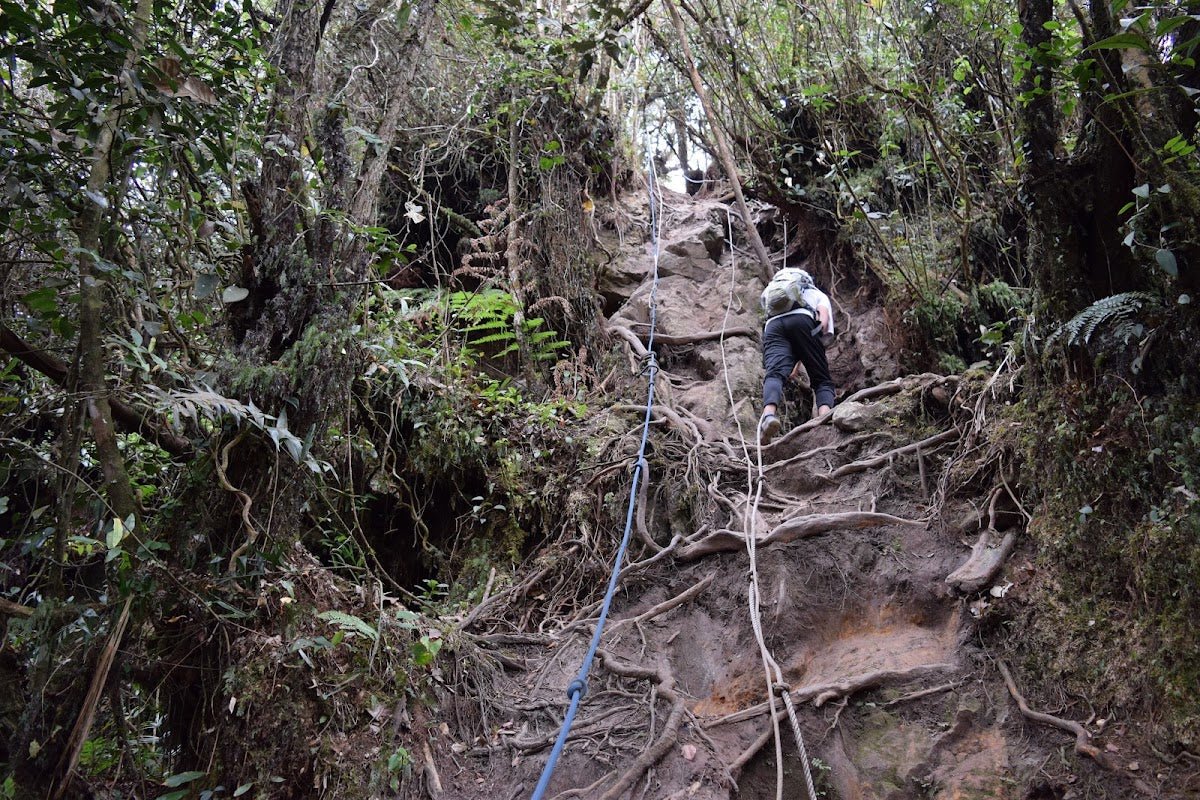
Beyond the main chamber, the route climbs up to a series of open-sided caves higher on the hill. This is where Bukit Charas earns its difficulty rating. The ascent involves steep metal steps — and "steep" here means the kind where you're engaging your thighs on the way up and your knees protest on the way down. The steps are manageable when dry. When wet, they become genuinely hazardous.
The railings along sections of this climb are rotting. Do not put your full body weight on them. Test before you grip, and use them for balance only, not as a primary safety anchor. There are no safety provisions along this route — if something goes wrong, help is not nearby. That's not scaremongering; that's just the reality on the ground.

If you have a fear of heights, turn back before this section. The exposure is real and the drop-off is unforgiving. This is one of those situations where knowing your limits before you commit is the smart call, not a weakness.
The upper caves are open-sided, so you get views out over the surrounding landscape — oil palm estates stretching to the horizon in most directions, with the limestone massif rising out of the flat ground around it. It's a striking contrast.

Descent & Safety
Going down the metal steps is where most people have close calls. Knees cop it, footing gets uncertain, and the slippery surface means one bad step matters. Take your time. Don't rush because someone behind you is impatient. Face the steps going down on the steeper sections if you need to — there's no shame in it, and it's genuinely safer.
Key hazards, stated plainly:
- Steep, slippery metal steps — significantly worse when wet
- Rotting handrails that should not be trusted with your full weight
- No safety infrastructure; no rescue provisions on-site
- Serious risk for anyone with acrophobia in the upper sections
- Dogs near the entrance — not aggressive, but be aware
If it's raining, or has recently rained heavily, seriously consider whether the upper section is worth it. The steps in wet conditions are a different proposition from dry ones. Turn back without guilt — the cave itself is worth the visit even without the climb.
What to Bring
This isn't a multi-day trek, but a few things make a real difference here:
- Footwear with grip: Non-negotiable. Trail shoes or approach shoes with actual rubber grip. Flip-flops and flat sandals are genuinely dangerous on those metal steps.
- Trekking pole: The descent on steep steps is much more manageable with a pole for balance. The TAHAN 3-Section Foldable Hiking Stick V2 packs down small enough to toss in a daypack — useful here precisely because you don't need it the whole time, just on the steep bits.
- Knee support: If your knees are even slightly temperamental, don't skip this. The step descent is repetitive and jarring. The TAHAN Kinetix Knee Guard With Spring Support is worth having in your bag for trips like this. Check our hiking gear guide if you're unsure what to look for.
- Water: No water points on the route. Bring enough for the full 2+ hours, especially if you're visiting midday in the April–September window.
- Small change: RM3 for parking, RM2 for admission. Have small notes ready.
- Modest clothing: This is an active religious site. Covered shoulders and knees are appropriate.
- Dry bag or waterproof layer: If there's any chance of rain, have something to protect your gear — and maybe rethink the upper climb.
FAQ
How hard is Bukit Charas?
Harder than it looks. The cave section is easy walking, but the metal steps up to the secondary caves are steep and slippery — particularly if wet. There are no safety provisions along the route. Anyone with a fear of heights should stay on the lower section. Fit adults with decent shoes should manage fine, but don't treat this as a casual stroll in sandals.
How long does Bukit Charas take?
Most visitors report 2+ hours for the full trip — uphill and downhill combined. If you're spending time in the cave chambers, watching the light phenomenon, or moving carefully on the steps (as you should), factor in more time. It's not a race.
Do I need a permit to hike Bukit Charas?
No specific hiking permit is required. There's a RM2.00 admission fee for the Gua Charas cave, plus RM3.00 for parking. That's it for fees, as far as current information shows — but requirements can change, so confirm before you go.
When is the best time to visit Bukit Charas?
April to September if you want to catch the light ray illuminating the Buddha's face — that happens between 11am and 12 noon during those months. Arrive by 10:30am at the latest to get settled inside the cave. Outside those months, it's still worth visiting for the cave and climb, just without that particular highlight.
Camp Nearby?
Bukit Charas is a half-day trip out of Kuantan, but if you want to make a proper weekend of it in the Pahang region, there are some solid camping options within driving range. Making a weekend of it? Woodstock Camp Janda Baik and Glamping Valley @ Janda Baik are popular choices if you're looping through the highlands, and Camp Mantap, Bentong is worth a look too if you're coming from the KL side. None of these are right next to Bukit Charas, but Pahang is big — a base camp makes the region much more manageable for a weekend trip.
Mike has been camping across Malaysia for over 10 years — from jungle treks in Taman Negara to beach camps in Perhentian. He writes about it so you don't have to find out the hard way. Follow along on TAHAN Outdoor's blog for honest campsite reviews, every week.