
Camping lets us get back to basics and enjoy nature without the creature comforts of everyday life. But having the right gear still matters — a lot. Good camping cookware is the difference between a hot, satisfying meal at the end of a long trail day and a sad situation involving cold instant noodles. This guide covers everything you need to know about choosing the best camp cookware for Malaysian conditions.
Cooking outdoors comes with challenges a home kitchen never throws at you. Space is tight, there's no running water, and your cooktop is a compact stove sitting on uneven ground. You need gear that's light enough to carry, tough enough to handle abuse, and versatile enough to pull double duty.
#1 Choosing the Right Camp Cookware Materials
Material is one of the first things to nail down. It affects weight, durability, heat efficiency, ease of cleaning, and how much fussing the cookware needs between trips.
| Material | Characteristics | Pros | Cons |
|---|---|---|---|
| Aluminum | Very lightweight, heats up quickly and evenly, prone to dents and scratches | Lightweight, good heat conductor | Dents easily, reactive to acidic foods |
| Stainless Steel | Strong and durable, heavier than aluminum | Very durable, easy to clean | Heavier, doesn't conduct heat as evenly |
| Cast Iron | Extremely durable, heats evenly once up to temperature | Excellent heat retention, works over campfire, nonstick when seasoned | Very heavy, rusts if not cared for |
| Enamel-Coated Metal | Smooth nonstick coating over metal core, decorative exterior | Lightweight options available, easy to clean, chip resistant | Enamel can crack or chip over time |
Think about where and how you'll use the cookware. Backpackers should go for lighter aluminum or nonstick-coated pieces. Car campers have more flexibility to bring heavier stainless, cast iron, or enameled options. Weigh up heating efficiency, care requirements, weight, and durability before deciding.
#2 Essential Pieces of Camp Cookware
A minimalist can survive with a single pot, but having the right core pieces makes camp cooking genuinely enjoyable. Here's what every camp kitchen should include.
i. Camp Stove
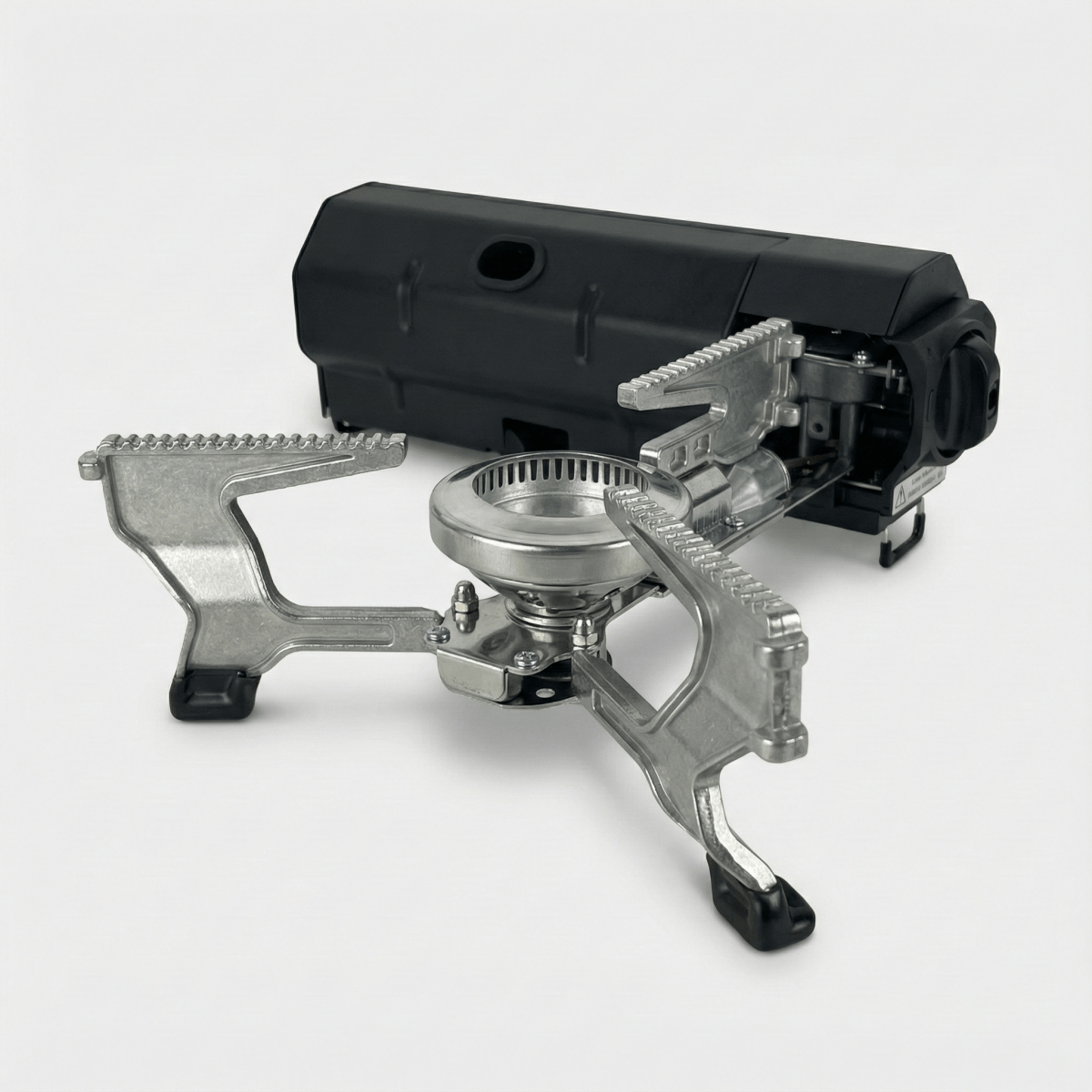
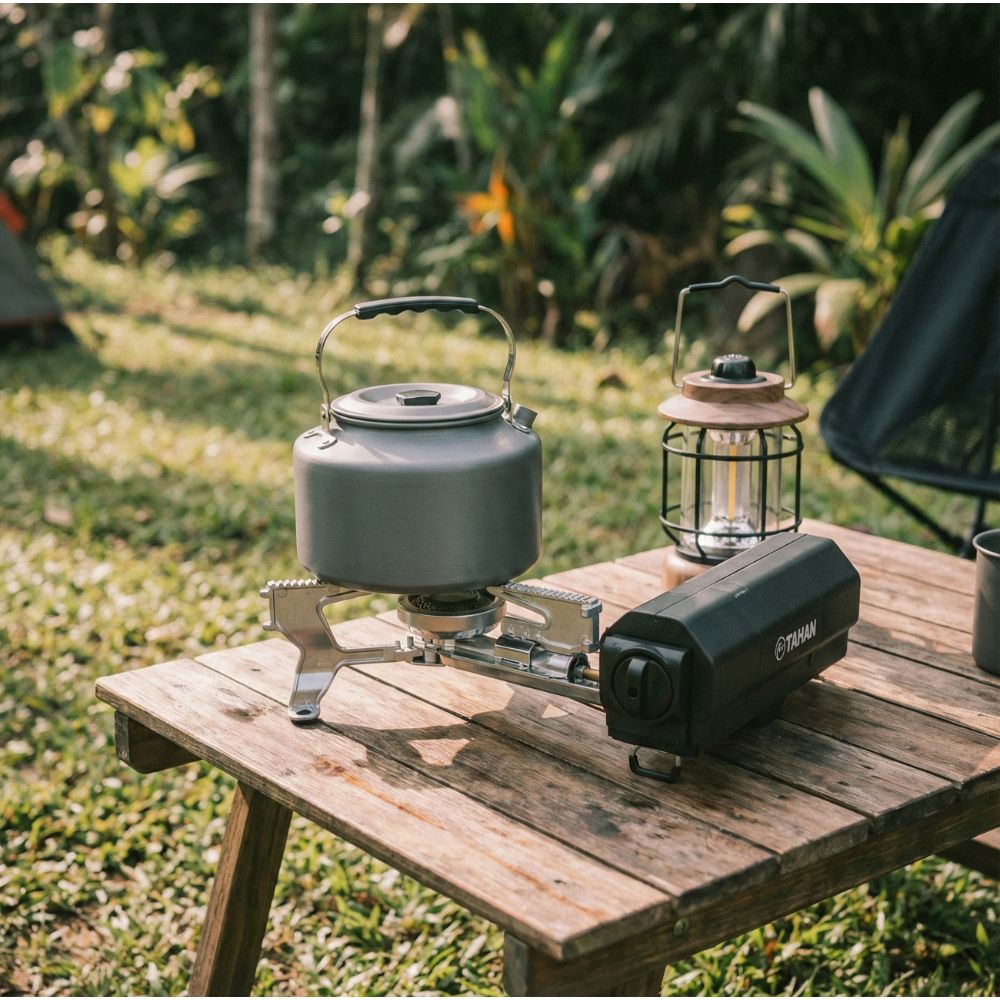
A portable stove means you're not relying on a fire to cook — which matters a lot at campsites in Malaysia where open fires are often restricted. Stoves vary widely in size, weight, and fuel type:
- Canister stoves — Use compressed gas canisters. Lightweight and compact, great for backpacking, though canisters cost a bit more.
- Liquid fuel stoves — Burn white gas or petroleum. Burn hotter but are heavier and bulkier. Good for serious backcountry trips.
- Propane stoves — Affordable and accessible fuel. Multi-burner models are ideal for car camping with a group.
Other things to check: ignition type, BTU output, boil time, and wind resistance. The TAHAN Windmaster Double Burner Camping Stove (RM199) is a solid choice if you're cooking for two or more people — dual burners let you heat water and cook a proper meal at the same time. Pair it with the TAHAN 40CM Portable Folding Windshield (RM49) to keep the flame steady when the angin kuat hits.


ii. Camp Pots

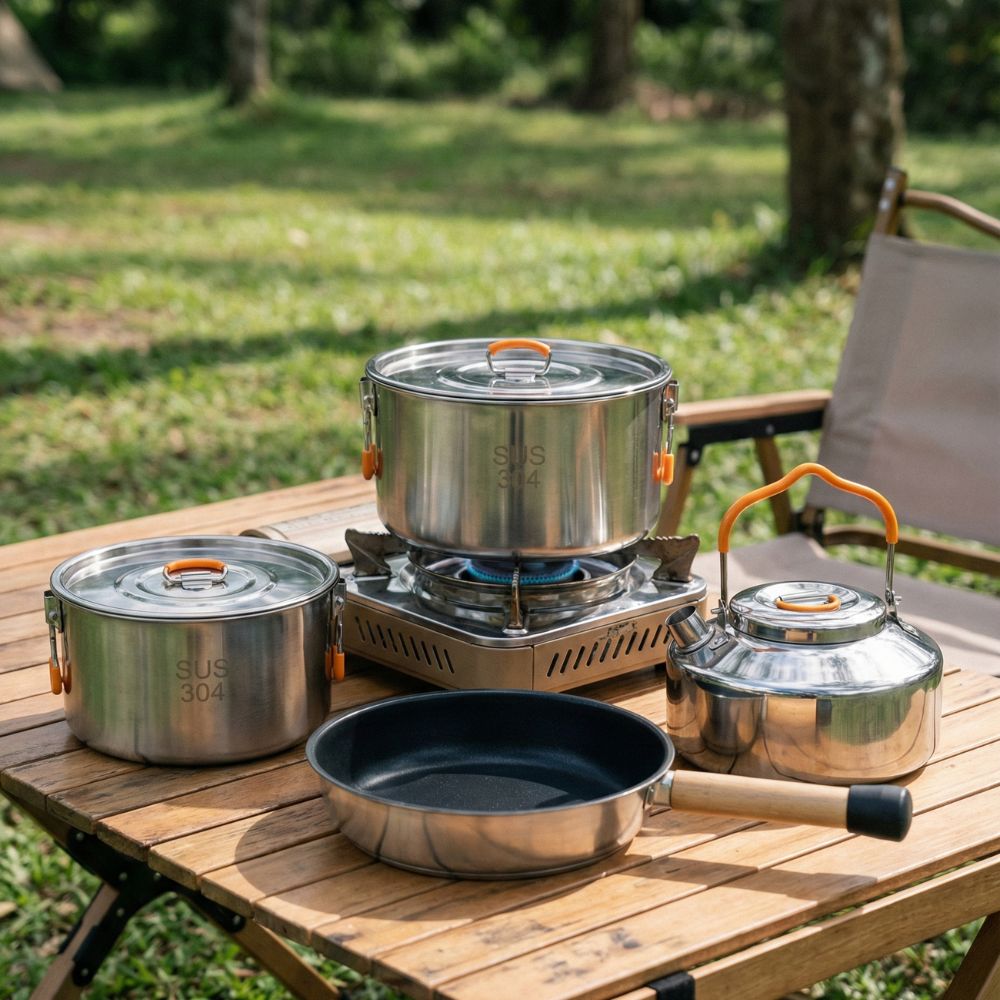
A good set of pots covers boiling water for drinks plus cooking rice, pasta, soup, or a decent one-pot curry. A 2–3 pot nested set with lids is the sweet spot:
- Small pot (2 qt / ~2L) — Boiling water or small batches
- Large pot (4–6 qt / ~4–6L) — Cooking for the group
- Kettle — Handy for heating water without tying up your main pot
Choose pots with handles that stay cool, and lightweight materials if you're backpacking. The L ProChef Stainless Steel Cookset — 4 Piece (RM199) is a well-rounded option for groups of 3–4 pax: solid stainless construction, nests neatly, and covers the pots-and-pan bases in one kit.
iii. Frying Pan / Skillet
Good for eggs in the morning, grilling meats, toasted sandwiches — anything that needs surface area instead of depth. Keep it lightweight and nonstick where possible. Some cooksets include a pan lid that doubles as a plate, which is always a win for space saving.

#3 Additional Useful Camp Cooking Gear
Beyond stove and pots, a few extra items make the whole camp kitchen experience smoother.
i. Cutting Board
A compact plastic or wood board with a handle gives you a clean surface for prepping vegetables, fruit, cheese, or meat. Throw one in the camp bin and you'll wonder how you managed without it.
ii. Cooking Utensils
Basic handling tools you actually need:
- Knives — chef's knife, paring knife, serrated knife
- Spatulas — metal for cast iron, plastic or silicone for nonstick
- Tongs — for turning meats and everything else
- Serving spoon or ladle — essential for soups and stews
- Can opener — if your meal plan includes canned goods
Look for camp-specific utensil sets where handles are heat-resistant. The TAHAN Compact Outdoor Dining Set (RM89) bundles the essentials into one compact, packable package — a practical pick if you'd rather not source everything individually.
iii. Plates and Bowls
Hardcore solo backpackers eat straight from the pot. Everyone else appreciates a plate. Collapsible silicone bowls and enamelware plates are both durable and nest flat for packing. The TAHAN GoCamp Collapsible Silicone Bowl (RM29) is a lightweight favourite — it packs almost flat and handles hot food without drama.
iv. Camp Sink Basin
A foldable basin is basically a portable sink. Fill it up, wash your dishes, dispose of the grey water properly away from water sources. It's a small thing that makes post-meal cleanup feel a lot less grim.
v. Camp Tableware
You need something to eat with too. A decent camp tableware setup covers:
- Knives, forks, and spoons
- Camp mugs — insulated ones keep your teh tarik warm longer
- Mesh bags to dry and organise utensils between uses
#4 Factors to Consider When Buying Camp Cookware
Once you've decided on materials and core pieces, these practical factors help narrow down the best pick for your setup.
i. Weight
Backpackers should cut pack weight wherever possible — titanium and aluminium cookware shine here. Nested sets that compact tightly are a bonus. Car campers have more leeway, so heavier stainless or cast iron becomes a viable option. Match your cookware weight to how far you're actually carrying it.
ii. Size and Capacity
Think about your usual group size. A solo or two-person backpacking set won't feed a family of four. For car camping or base camp setups, look for higher-capacity pots that can handle 4–6 people per batch.
iii. Easy Cleaning
Nonstick or enamelled surfaces save a lot of scrubbing effort at the campsite. Use biodegradable camp soap and a foldable basin to keep washing efficient and low impact on the environment around you.
iv. Nesting Ability
Cookware sets that nest inside each other are worth the extra thought when packing. Less rattling, less wasted space, fewer things to track down when breaking camp.
Campsite intel, weekend spot ideas, and family camping tips — straight from campers who just got back. Ask before you book.
💬 Join the Camping CommunityFree, one click. No spam — the occasional promo at most.
#5 Care and Maintenance Tips for Camp Cookware
Good cookware is an investment. Treat it right and it'll last through years of trips.
i. Handwash Properly
Wash shortly after use before food dries and sticks. Warm water and biodegradable camp soap does the job. Skip harsh detergents that strip seasoning or damage coatings over time.
ii. Inspect for Damage
After longer trips, check for dings, cracks, or warping once you're home unpacking. Better to catch issues early than discover them at the campsite on your next trip.
iii. Store It Well
Nest cookware together and wrap in a soft cloth inside a plastic bin or padded bag between trips. Don't stack heavy pots directly on softer aluminium — you'll come back to dents. A little care in storage adds years of life.
iv. Re-Season Cast Iron at Home
Scrub cast iron by hand without soap, dry it completely, rub with a thin layer of cooking oil, and heat in the oven for about an hour. Wipe away excess oil once cooled. Do this periodically to maintain the nonstick surface and keep rust away.
#6 Camp Cooking Safety Tips
A few habits that keep the camp kitchen safe for everyone:
- Set up your stove on a flat, stable surface well away from tent walls and dry vegetation
- Keep kids and pets at a safe distance from hot surfaces and open flames
- Avoid loose clothing near the stove; tie back long hair
- Have water or a fire extinguisher within reach for flare-ups
- Let cookware cool completely before packing — you don't want melted dry bags
Simple precautions go a long way. Malaysian campsites can get crowded; the last thing anyone needs is a cooking accident in a tight space.
Getting the Most From Your Camp Cookware
A few habits that extend the life and performance of your gear:
- Season cast iron before first use — oil and heat it to build an initial protective layer
- Use the right utensils — avoid metal tools on nonstick pans to protect the coating
- Avoid thermal shock — let cookware cool a little before rinsing with cold water to prevent warping
- Protect handles in transit — nest lids inverted and pad with a cloth to avoid cracking or denting
Small habits, consistently done, keep your cookware performing trip after trip. If you're still building out your full camp setup, our Beginner Camping Checklist is a good reference for everything else you'll want to pack alongside the kitchen kit.
FAQs About Outdoor Cooking
How can I extend the lifespan of my outdoor cooking equipment?
Clean and dry gear thoroughly after each use. Avoid abrasive tools on nonstick surfaces. Inspect regularly for wear. For cast iron, periodic oil seasoning prevents rust and maintains the nonstick finish.
Where can I find affordable camping cutlery and kitchen tools in Malaysia?
Check out TAHAN Outdoor — we carry a solid range of camp cooking essentials from cooksets to cutlery. You can also find us on Shopee and TikTok Shop.
What are some tips for cooking over a campfire?
Use a stable grill grate over the fire. Build a good coal base for even heat rather than cooking over open flames. Prep ingredients beforehand to keep things efficient, and use foil for easy cleanup on certain foods.
How do I manage leftovers while camping?
Portion control is the most effective approach — cook only what you'll eat. For anything leftover, resealable containers or reusable silicone bags keep food fresh. Plan meals that repurpose ingredients across multiple days to reduce waste.
What is the basic process for washing dishes when camping?
Scrape food debris into a rubbish bag first. Use hot water and biodegradable soap in a portable basin, away from rivers and streams. Scatter grey water at least 60m from any water source. Simple, but the right way to do it.
Looking to round out your full camp setup beyond the kitchen? Check out our Beginner Camping Checklist for Malaysia — covers everything from shelter to sleep systems so nothing gets left behind.
Campsite intel, weekend spot ideas, and family camping tips — straight from campers who just got back. Ask before you book.
💬 Join the Camping CommunityFree, one click. No spam — the occasional promo at most.