
Water Containers & Coolers for Camping in Malaysia: Plan Your Water Right
Here's something I learned the embarrassing way on a family trip to Chemerong a few years back — we packed enough food for three days but somehow underestimated how much water four people drink when it's 33°C and someone's always asking "ada air tak?" by 10am. We were rationing by day two. Not great. Not a mistake I've made twice.
After a decade of camping everywhere from Taman Negara to Teluk Bahang, I've come to think water planning is honestly the most underrated skill in Malaysian camping. The heat here is no joke. The campsite taps — when they exist — are not always trustworthy. And if you've ever tried to pour drinking water from a 5-litre bottle with wet hands over a dirty camp table, you know there's a better way. Same goes for coolers: most people buy the cheap box, load it with ice, and wonder why everything's lukewarm by the afternoon of day one.
This guide is about doing it properly. What to think about before you buy anything, how much water you actually need, and what gear actually holds up in Malaysian conditions. I'll show you some TAHAN gear too — full transparency, that's who runs this blog — but the buying advice up front is just honest camping knowledge, no spin.
What Actually Matters (in Malaysia)
How Much Water Does Your Group Actually Need?
The general rule you see online — 2 litres per person per day — is for people sitting in air-conditioned offices. In Malaysian heat, hiking from camp, cooking over a stove, and sweating through the night? Budget closer to 4–5 litres per adult per day, more if you have kids running around. A family of four on a two-day trip needs somewhere around 30–40 litres minimum. Once you do that math, you quickly realise why individual water bottles don't cut it and why a proper storage container with a spigot changes your whole camp setup.
Campsite Water — Can You Trust It?
Some campsites in Malaysia have pipe water. Some have a stream nearby. Some have a tap that trickles like a sad garden hose and smells faintly of rust. My honest advice: always bring your own supply for drinking and cooking, even if the campsite says water is available. Use campsite water for washing dishes and rinsing gear if you want, but treat your drinking supply as something you control from home. Fill your containers before you leave, know exactly what you're carrying, and you'll never be in a sketchy situation.
Spigot Containers vs Lugging Bottles
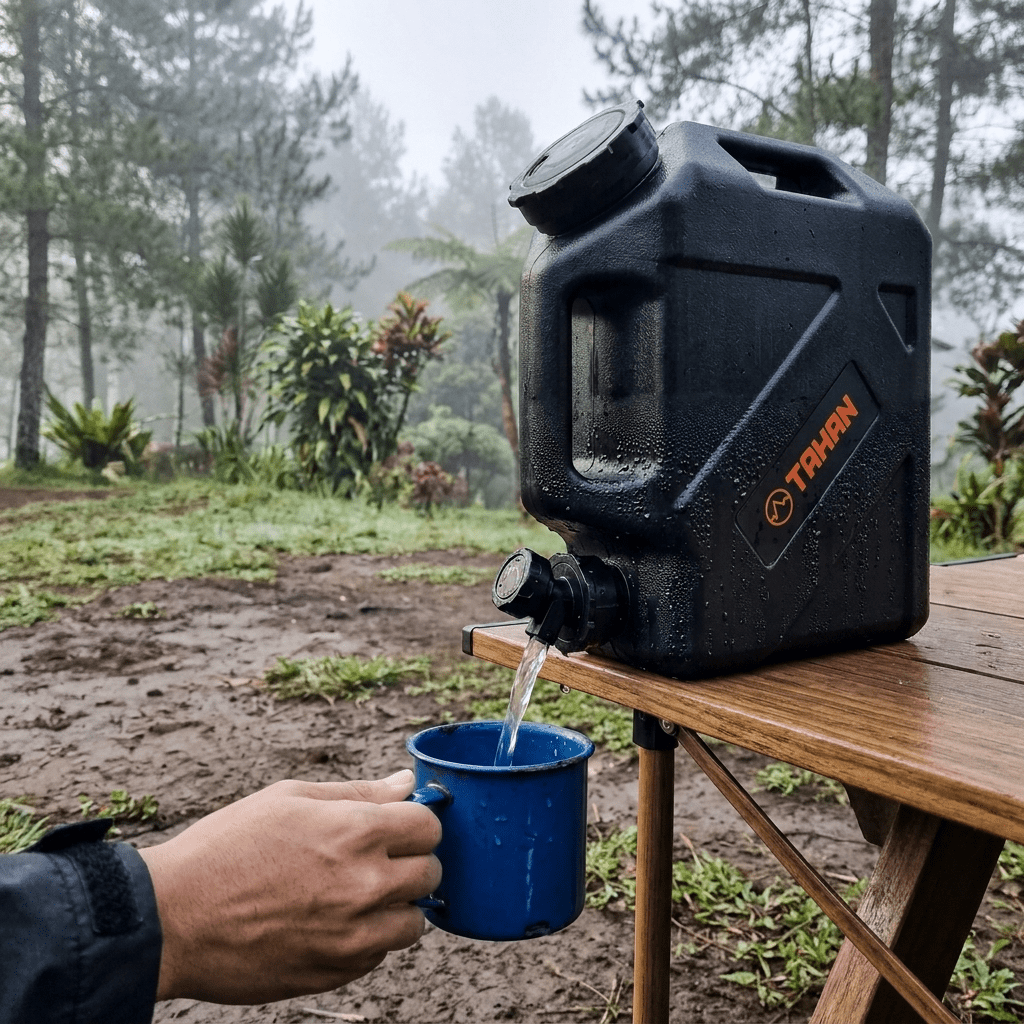
I see people at campsites hauling individual 1.5L bottles and stacking them like they're running a convenience store. I get it — it's familiar. But once you switch to a proper container with a built-in spigot, there's no going back. You place it on your camp table or a cooler box, turn the tap, fill your cup or pot cleanly — no tipping a heavy bottle with slippery hands, no water splashing everywhere. For families especially, it's the kind of upgrade that makes the whole camp feel more organised without costing much.
Hydration Bladders for Day Hikes from Camp
A lot of Malaysia's best campsites are base camps for day hikes — waterfalls, ridges, viewpoints. You don't want to carry a water bottle in your hand for four hours on a jungle trail. A hydration bladder lives inside your pack, the drinking tube sits on your shoulder strap, and you sip without breaking pace. This matters more than people think: when drinking is effortless, you actually drink enough. When you have to stop, unzip, dig out a bottle — you don't. Dehydration on a Malaysian trail is genuinely dangerous, not just uncomfortable.
Coolers: Ice Duration Is Everything
A cooler's only real job in Malaysian weather is keeping things cold long enough to matter. Cheap foam boxes lose the battle by midday. What you want is a cooler that can realistically hold temperature for 24 hours or more — that covers a full day trip, an overnight, or a long drive. Beyond ice retention, think about capacity: a cooler that fits your group's drinks AND perishable food means you're not making a separate decision about food safety. A cooler full of ice is also your fresh food safety net — yoghurt, eggs, raw meat, dairy all need to stay below a certain temperature or you're dealing with a stomach situation at camp, which nobody wants.
How Much Water to Bring Camping (and What Size Container)
Quick note before we get into the numbers: what follows is a practical planning guide for Malaysian camping conditions, not medical advice. If you have specific health needs or are doing something more intense than a typical campsite weekend, check with a healthcare professional.
Planning Your Water per Person per Day
The existing section up top already makes the point that 2 litres a day is for office workers, not campers in 33 degrees heat. So let's turn that into something you can actually plan with. For a typical Malaysian camping trip, a rough daily water budget per adult looks like this:
| Use | Estimated amount per person |
|---|---|
| Drinking (resting, light activity) | 2 to 3 litres |
| Cooking (boiling water, rinsing food) | 0.5 to 1 litre |
| Basic washing up and hands | 0.5 to 1 litre |
| Total planning range | 3 to 5 litres per person per day |
On hot days where you are hiking, playing, or doing any kind of physical activity, push toward the higher end or beyond it. These are planning ranges, not precise targets. Build in extra buffer and you will never regret it. Run short and you will.
When a 10L Container Is Enough and When You Need 20L
A 10L water container for camping covers a solo camper or couple quite comfortably for a one or two night trip, especially if you are mainly at basecamp. Two people at 4 litres a day for two nights means roughly 16 litres, so one 10L container plus a backup gets you there.
Once you are feeding a group of three or more, or going beyond a single night, a tong air 20 liter becomes the more practical choice. It reduces how many times you are refilling or lugging multiple smaller containers around camp. For families especially, the fewer individual containers you are juggling, the calmer the whole camp setup feels.
Spigot vs Tap vs Pump: Which Dispensing Style Works at Camp?
- Spigot (built-in tap on the container): The most practical for a basecamp setup. Place the container on a table or elevated cooler box, open the spigot, fill your pot or cup cleanly with one hand. No tipping, no spillage. This is what the TAHAN 10L container uses, and it genuinely changes how smoothly your camp kitchen runs.
- Pump dispenser: Works well for large 19L gallon jugs where tipping is not realistic. The TAHAN Automatic Water Dispenser fits this role, one press and the water comes to you. Best for car camping or semi-permanent setups where a big jug is already part of the plan.
- No dispenser, just a wide mouth: Fine for pouring into larger pots where precision does not matter, but frustrating for cups and water bottles.
Keeping Your Water Container Clean and Cool
Humidity and heat are exactly the conditions that turn a neglected water container green inside. A few simple habits keep that from happening:
- Store in the shade. Direct sun warms the water and accelerates any bacterial growth. Even a tarp overhang makes a difference.
- Rinse and dry fully after every trip. Do not pack a container away damp. Leave the mouth open and let it air out completely before storing.
- Clean with warm water and a small amount of mild soap after each trip, and rinse thoroughly. The wide mouth on the TAHAN 10L makes this actually doable rather than a frustrating reach-in job.
- Fill from a known clean source at home and treat campsite water as a backup for non-drinking uses only.
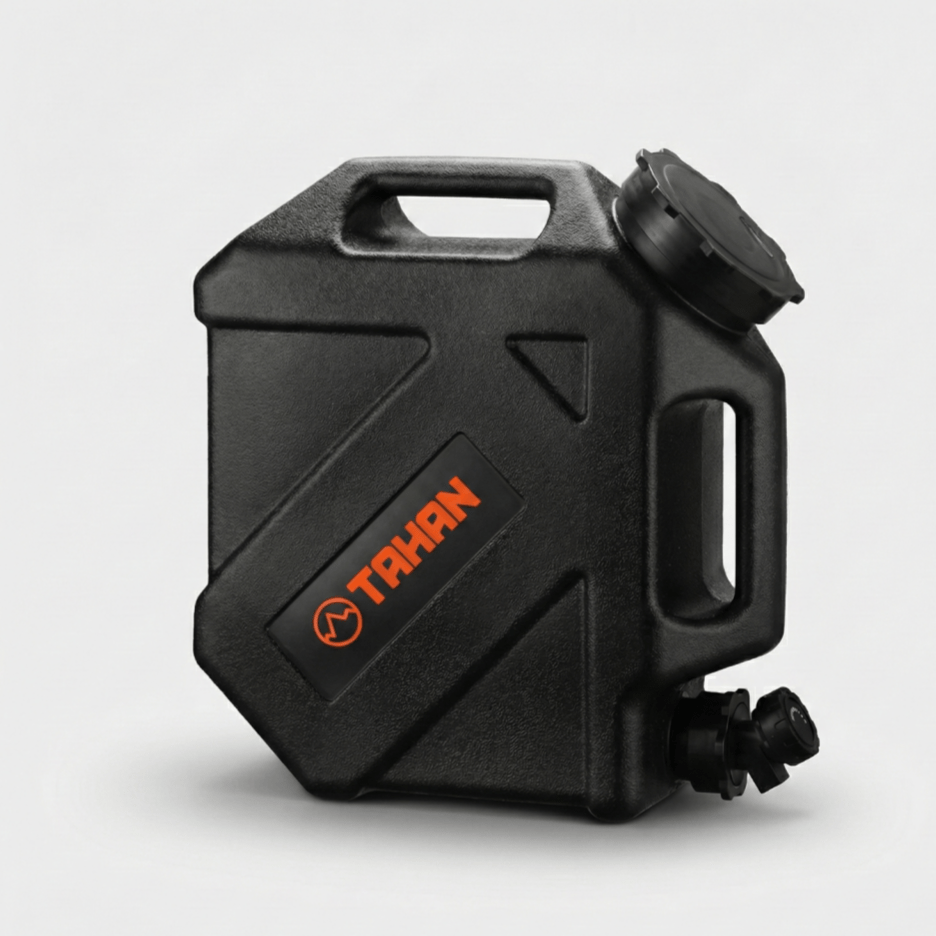
TAHAN 10L Water Container
Full disclosure — this is our own gear at TAHAN, and I've been using it at camp. Make of that what you will, but I'll tell you exactly what it does and doesn't do.

- Capacity: 10 litres
- Built-in spigot for clean, controlled dispensing
- Wide mouth for easy filling and cleaning
- Anti-slip grip for wet-hand handling
- Price: RM79 at the time of writing
This is the container I'd hand to anyone setting up a family basecamp. The spigot means you fill a pot or a water bottle without drama — no tilting, no spillage, no arguing with a heavy container over a small opening. The wide mouth makes it genuinely easy to clean properly, which matters if you're using it trip after trip. Anti-slip grip sounds like marketing but honestly, around camp with wet hands and sandals, it's a real thing.
Who shouldn't buy this: if you're a solo camper doing short overnights and happy carrying a couple of 1.5L bottles, RM79 for a 10L container is probably more than you need. It's sized and priced for groups. Solo minimalists can skip it.
See the 10L Water Container at TAHAN →
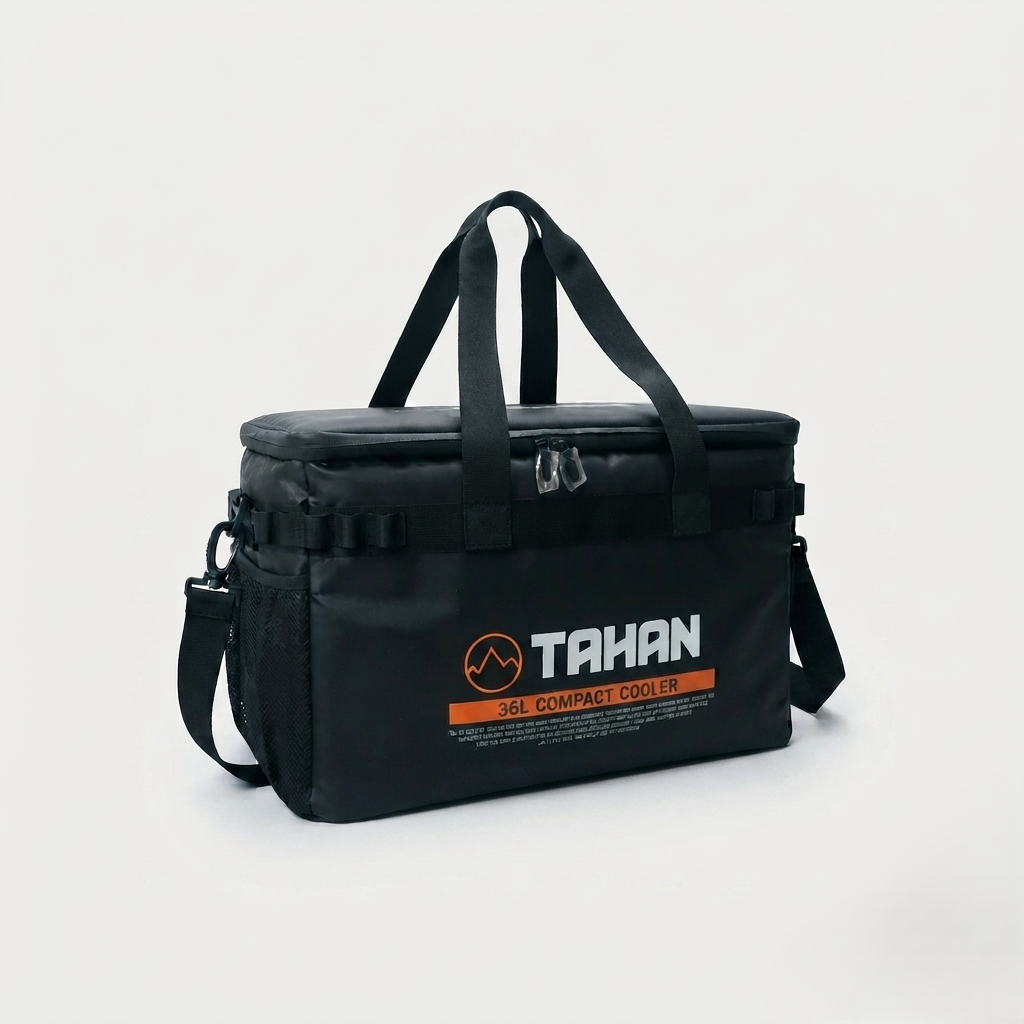
TAHAN 36L Compact Cooler
This one's ours too — I'll keep the disclosure light since you already know the deal.

- Capacity: 36 litres
- Keeps contents cold for up to 24 hours
- Holds up to 15kg
- Folds flat for storage when not in use
- Price: RM189 at the time of writing
36 litres is the sweet spot for a group of four — enough for a full day's worth of drinks, your perishable food, and a decent block of ice without running out of room. The 24-hour cold retention is what makes it actually useful in Malaysian heat rather than just a slightly insulated box. The fact that it folds flat is a genuinely underrated feature; most hard coolers sit in your storeroom taking up space for 50 weeks a year. This one doesn't.
Honest con: if you need ice to last beyond 24 hours — think a three-day trip where you can't restock — this cooler isn't going to get you there. For multi-day expeditions with no resupply, you'd want a heavier-duty hard cooler with thicker insulation. This is built for day trips, overnights, and weekend camps, and it's honest about that.
See the 36L Compact Cooler at TAHAN →
Campsite intel, weekend spot ideas, and family camping tips — straight from campers who just got back. Ask before you book.
💬 Join the Camping CommunityFree, one click. No spam — the occasional promo at most.
TAHAN TrailBladder 2L Water Bladder

- Capacity: 2 litres
- BPA-free materials
- Bite valve for hands-free drinking on the move
- Leak-proof double-seal closure
- Easy to refill and clean
- Price: RM69 at the time of writing
For day hikes out of camp — and honestly, most Malaysia camping involves at least one trail — this is the piece of kit I'd argue makes the biggest difference to how you feel at the end of the day. Sipping consistently without stopping is just better hydration than drinking in bursts when you remember. The double-seal means you don't pull out your pack at the summit to find your dry bag isn't so dry anymore, which I've experienced with cheaper bladders and it's not fun. Light enough that you genuinely forget it's in your pack once it's there.
Who shouldn't buy this: if your camping style is purely basecamp — you set up the tent, sit in a chair, play cards, zero hiking involved — a bladder is overkill. A water bottle is fine. The TrailBladder earns its keep specifically when you're moving.
See the TrailBladder 2L at TAHAN →
TAHAN Automatic Water Dispenser

- Sits on top of a standard 19L water bottle (gallon jug)
- One-press dispensing — no lifting, no tipping
- Rechargeable battery, lasts through hundreds of uses
- BPA-free materials
- Operates quietly
- Price: RM29.90 at the time of writing
This one's a bit different from the others — it's designed for people who already use those big 19L water jugs at home or at a semi-permanent camp setup. If you've ever tried to tip one of those things to fill a glass, you know it's a two-person job waiting for an accident. This pump sits on top and does the work for you with one press. At RM29.90 it's genuinely one of the lowest-effort upgrades you can make to a campsite that stays set up for a few days.
Honest con: this only works with a 19L gallon bottle — it doesn't fit smaller containers. If you're backpacking light or working from a 10L container, this isn't your tool. It's best suited for car camping or glamping setups where a big jug is already part of your kit.
See the Automatic Water Dispenser at TAHAN →
FAQ
Nak beli tong air 20 liter untuk camping, cukup ke untuk family?
For most Malaysian families of three to four people on a two day camping trip, a 20 litre water container is a solid starting point but tight if you are relying on it as your only source. At a planning range of 3 to 5 litres per person per day, a family of four across two days needs roughly 24 to 40 litres for drinking, cooking and washing up combined. A 20L container works well as your main drinking and cooking supply when you supplement it with a second smaller container or plan to top up on arrival. It is also much easier to manage at camp than carrying multiple smaller bottles, and a container with a built-in spigot makes dispensing clean water a much calmer process than wrestling with big jugs.
How much water do I need for camping in Malaysia, really?
As a practical planning guide, budget 3 to 5 litres per adult per day covering drinking, cooking and basic washing up. On hot, active days with hiking involved, go toward 5 litres or more per person. Children vary depending on age and activity level, so factor them in separately rather than halving an adult number. These ranges are meant to help you plan how large a water container for camping you need before you leave home, not as medical targets. The key rule: always bring more than you think you need. Leftovers are never a problem. Running short in Malaysian heat, far from the nearest town, is a problem you really do not want to be managing on day two.
How much water should I bring camping in Malaysia?
In Malaysian heat, plan for 4–5 litres per adult per day — more if you're hiking. The common 2-litres-a-day advice is based on sedentary, air-conditioned living. A family of four on a two-night trip should bring 30–40 litres minimum for drinking and cooking, stored in containers you control from home rather than relying on campsite taps.
Can I trust campsite water taps in Malaysia?
Sometimes yes, sometimes no — and you often won't know until you're already there. The safe approach is to bring your own drinking and cooking water from home, and use campsite water only for washing dishes or rinsing gear if needed. It's not about being paranoid; it's just one less variable in an already unpredictable environment.
How long does ice last in a cooler in Malaysian weather?
In direct sun at 33°C, a basic foam cooler might give you 4–6 hours. A properly insulated soft or hard cooler — like one rated for 24-hour retention — will realistically keep things cold through a full day and overnight if you pack it right (pre-chill the cooler, use block ice rather than cubed, keep it in the shade, and minimise opening). For trips longer than two days, you'll need to plan an ice resupply.
Do I need a hydration bladder or is a water bottle enough for jungle trails?
If you're doing any trail hiking from camp — even a moderate 2–3 hour walk — a hydration bladder is worth it. The difference is that with a bladder you sip continuously without stopping, which keeps your hydration steady. With a bottle you tend to wait until you feel thirsty, by which point you're already mildly dehydrated. In Malaysian humidity and heat, that gap matters more than it would on a cooler trail.
Where to Try This Gear
Trying this gear out? Start with one of the Best Beach Campsites in Malaysia for a weekend test run — or head inland to one of the Best Waterfall Campsites in Malaysia where water planning really earns its keep.
Campsite intel, weekend spot ideas, and family camping tips — straight from campers who just got back. Ask before you book.
💬 Join the Camping CommunityFree, one click. No spam — the occasional promo at most.
Related gear guides:
Mike has been camping across Malaysia for over 10 years — from jungle treks in Taman Negara to beach camps in Perhentian. He writes about it so you don't have to find out the hard way. Follow along on TAHAN Outdoor's blog for honest campsite reviews, every week.